
Professor Caroline Ayad (Cairo - Egypt) is a Professor of Diagnostic Radiology at College of Medical Radiological Science, Sudan University of Science and Technology (SUST), Sudan. She is the Secretary of Academic Affairs at SUST and she supervised more than 250 MSc and 30 PhD students in the field of Diagnostic Radiological Technology and ultrasonography at STSD and many other universities. She had published more than 100 research papers in International Scientific journals as well as 6 scientific medical books. She was the Head Department of Basic Science for one year as well as Deputy Dean College Of Medical Radiological Science for 8 years (2 rotations), and Head Department of Research Outcomes and Patents Deanship Of Scientific Research. She was a Member in many Academic and scientific committees (Curriculum design, examinations and Quality management and accreditation) inside and outside the university. She acts as assistant editor and editor of many scientific journals as well as reviewer of articles for national and international scientific journals. She is a Member of international society of Obstetrics and Gynaecology (South Africa), member of American Institute of Ultrasound In Medicine (AIUM) (USA), member of British Medical Ultrasound Society, London (UK), and member of British Radiology Association, London, UK.
Professor Dhiya Al-Jumeily OBE (Liverpool - UK) has 30+ years experience in artificial intelligence and machine learning. In 2020, Prof Al-Jumeily was appointed by her majesty “THE QUEEN to the Most Excellent Order of the British Empire, “OBE- Ordinary Officers of the Civil Division of the said Most Excellent Order” for the “Services to Scientific Research”. Within healthcare field Prof Al-Jumeily developed SMART applications for disease diagnosis and management that are currently used by patients in the UK, UAE and Iraq. On the scientific community level, Prof Al-Jumeily established the eSystems Engineering Society (eSES) that has contributors from researchers and scientists at worldwide. The eSES activities include intelligent patient management system; datasets and databanks; DeSE annual and international conference; accredited professional courses; and the International Journal of Data Science and Advanced Analytics. On the research funding level, Prof Al-Jumeily attracted more than £7.5M of funding and published >350 publications.
 Dr Ibrahim Alfaki (UAE) is an Associate Professor of statistics in the Department of Statistics and Business Analytics at the United Arab Emirates University (UAEU). His research focuses on applied econometrics, spatial and statistical modeling, and data-driven policy analysis, with particular applications in road safety systems, economic and financial analytics, and the measurement of knowledge-based economies. His work emphasises the use of quantitative and data analytics methods, such as time series and econometric modeling, to support evidence-based decision-making and institutional performance evaluation. Professor Alfaki has contributed to national policy research, including the UAE Human Development Reports, in collaboration with government and international organizations. He has also served on the Scientific Committee of the Abu Dhabi Statistics Centre. In addition, he is a member of editorial advisory boards of several international journals, including WJEMSD, WJSTSD, and IJIKMMENA. His work reflects a sustained contribution to statistical applications in sustainable development and public policy.
Dr Manal Elnour (Riyadh - KSA) is currently working as Diagnostic Radiologist and Fetomaternal Sonolgest at one of Riyadh, KSA leading healthcare provider. She has more than 12 years expereince in KSA and completed successfully OBE and Gynae Ultrasound Diploma by American Association of Medical Education in 2024 and she has a Fellowship in Feto Maternal Medicine in ASFM 2019. She completed successfully several training programmes including Fetal Echo Cardiography training in Dubai 2017; Infertility Ultrasound training Dubai-Germany 2018; Fetal Echo Cardiography training in London School of Ultrasound 2019; and Obe and Gynaecology Ultrasound course from Queen Mary University of London in 2022.
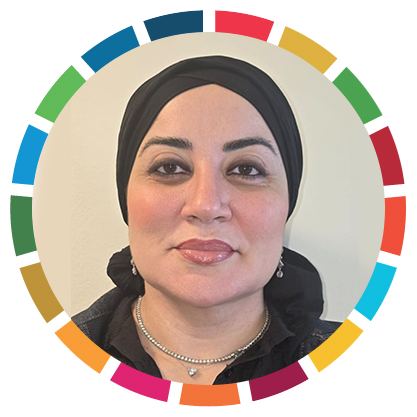
Dr Nisrine Slitine (Morocco) has always been attentive to the needs of the Moroccan society. As a doctor with a great entrepreneurial spirit, she quickly became aware of the importance of paramedical professions in the provision of health care at the national level, and the great deficit that the Kingdom knows in this matter. As a result, Dr Nisrine went into the business world, before supporting her doctoral thesis, and enrolled in the continuing education cycle of the Institut Supérieur de Commerce et d'Administration des Entreprises (ISCAE), a Business Management specialty, in order to equip itself with all the tools necessary to meet this crucial need that it has identified in the paramedic market.