
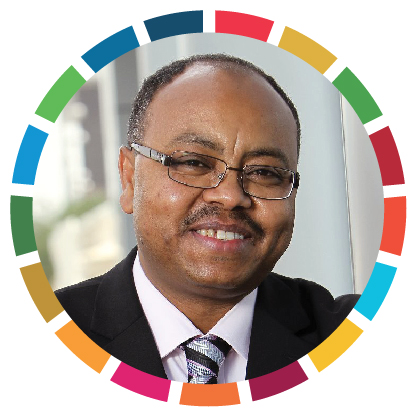
Professor Allam Ahmed (London - UK) is a Professor of Knowledge Management and Sustainable Development; Co-Founder of SMART KM MODEL: An Integrated Knowledge Management Framework for Organizational Excellence and led the implementation of the first of its kind in the Middle East and North Africa Knowledge Management Framework Musharaka. Founding President of WASD; SDGs Universities Initiative; Middle Eastern Knowledge Economy Institute; Fellow Faculty of Public Health, UK; Fellow Chartered Institute of Marketing, UK; and Fellow Academy of World Business, Marketing and Management Development, Australia. Prior to QMUL, Prof. Ahmed spent 15 years at the University of Sussex Science Policy Research Unit (1st science and policy think tank in the UK) where he established and led Sussex’s most successful postgraduate programme MSc International Management.
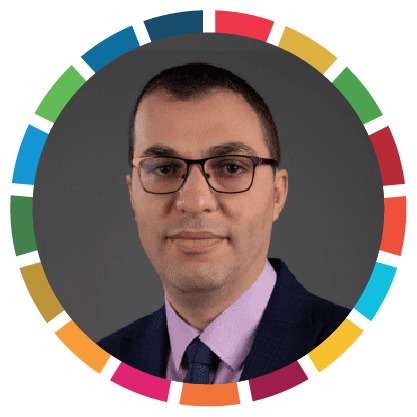
Professor Michael Busler (New Jersey - USA) is a Professor of Finance at Stockton University in the USA. He has held positions at Pennsylvania State University, Delaware University, Rutgers University and Drexel University. He teaches courses in Corporate Finance, managerial economics and Entrepreneurship. Dr. Busler is a known expert in Public Policy and Economics. He has published more than 65 refereed journal articles and nearly 1000 opinion columns in major publications. In addition, he has given hundreds of interviews on both syndicated radio and on network tv stations.
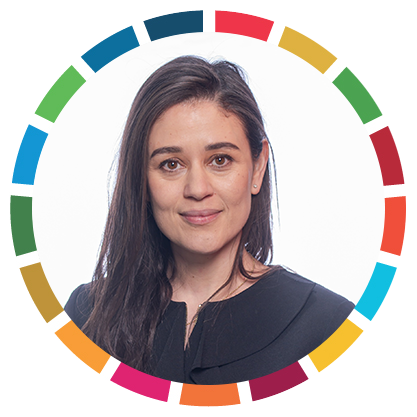
Miryem Salah (London - UK) is the director for Digital, Data & AI Transformation, Managing Director for the MSP sales channel of Vodafone Business IT hubs at VodafoneThree.Having led on major transformation across IT, digital, data, analytics and AI globally in private, public sectors. Miryem operates at the intersection of strategy, execution, culture, and impact-the space where she has consistently delivered the greatest value. She brings end‑to‑end ownership: setting direction, aligning capital and talent, and taking full accountability for outcomes. Her experience spans sectors and geographies, with leadership across the full enterprise agenda. Miryem brings strong financial and commercial acumen, with deep expertise in capital allocation, business case development, operating model design, and benefits realisation. She has led complex, multinational organisations through change under pressure-modernising infrastructure, integrating cultures, and delivering measurable improvements in customer experience, efficiency, and profitability. Building high‑performing, inclusive leadership teams with clarity, pace, and accountability. She is deeply committed to sustainability, diversity, and developing future leaders. Miryem is known for authentic leadership, decisive action, and strong stakeholder engagement at the shareholder, board & investor level.
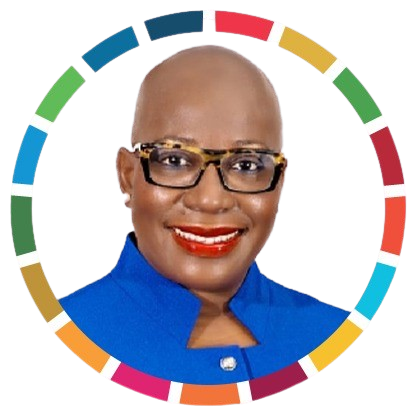
Dr Gale Rigobert (Saint Lucia - Caribbean) is Former Dean of Academic Affairs at the University of St. Martin (USM), in the Dutch Caribbean. She is the former Minister for Education, Innovation, Gender Relations and Sustainable Development in Saint Lucia (2016-2021). Prior to becoming a parliamentary representative, a position she held on to for over nine (9) years (2011-2021), she was a government senator for a short period, which followed her role as advisor on national development to the Government of Saint Lucia (2010-2011). Dr. Rigobert was appointed Leader of the Opposition in 2013, the first woman to hold such office in the island of Saint Lucia.
Her career path has taken her through the hallowed walls of academia, with her career spanning several countries and institutions: The University of the West Indies, St. Augustine, Trinidad and Tobago (2002-2010); SPRU, University of Sussex (2009), the United Kingdom; Anton de Kom University, Suriname (2009); the Interdisciplinary Global Development Centre (IGDC), University of York (2021-2022) and now the University of St. Martin.
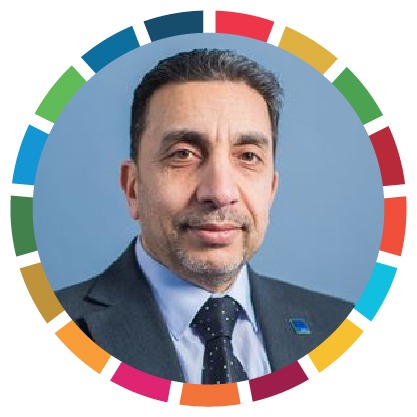
Professor Dhiya Al-Jumeily OBE (Liverpool - UK) has 30+ years experience in artificial intelligence and machine learning. In 2020, Prof Al-Jumeily was appointed by her majesty “THE QUEEN to the Most Excellent Order of the British Empire, “OBE- Ordinary Officers of the Civil Division of the said Most Excellent Order” for the “Services to Scientific Research”. Within healthcare field Prof Al-Jumeily developed SMART applications for disease diagnosis and management that are currently used by patients in the UK, UAE and Iraq. On the scientific community level, Prof Al-Jumeily established the eSystems Engineering Society (eSES) that has contributors from researchers and scientists at worldwide. The eSES activities include intelligent patient management system; datasets and databanks; DeSE annual and international conference; accredited professional courses; and the International Journal of Data Science and Advanced Analytics. On the research funding level, Prof Al-Jumeily attracted more than £7.5M of funding and published >350 publications.
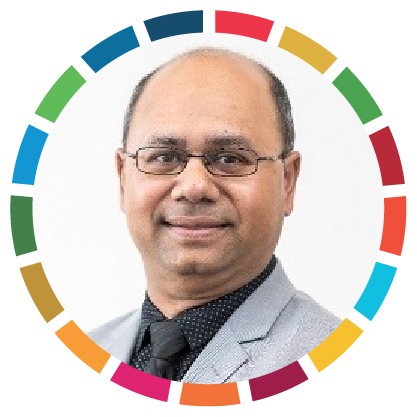
Dr Joyce Capelli (São Paulo - Brazil) is the President and Executive Director of Instituto Melhores Dias, expert in the formation of collaborative public-private partnerships that leverage the unique skills and resources of corporations, government and community groups to sustain vital education, health and community development programs in Brazil and other countries. She holds a degree in dental sciences, master’s in dentistry, specialization in administration for the third sector, graduated by the Brazilian Institute of Corporate Governance, training in depth psychology.
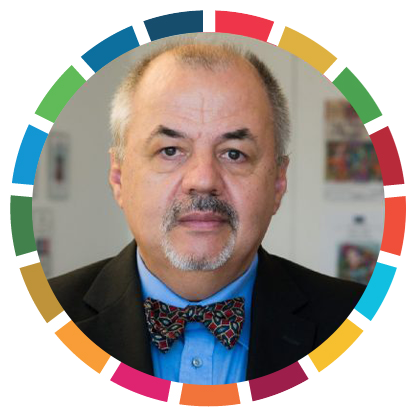 Ambassador (Ret) Dr Petru Dumitriu (Geneve - Switzerland) is a Former Ambassador and Permanent Observer of the Council of Europe to the United Nations in Geneva. Currently Senior Fellow and Lecturer on Multilateral Diplomacy postgraduate courses, Diplo Foundation/University of Malta. Former member of the United Nations Joint Inspection Unit and Editor of numerous reports including: Strengthening the policy research uptake in service of the 2030 Agenda for SD, Role of PPPs in the Implementation of Agenda 2030, Knowledge Management in the UN System
Samia Melhem (Washington - USA) is a Lead Policy Specialist at the World Bank’s Digital Development and AI Vice Presidency, based in Washington DC. She manages digital government transformation operations, leveraging technologies to improve delivery of public services in all sectors. She is currently leading a large digital government investment project portfolio, and regional research on Digital Skills for Jobs; as well as AI’s impact on the digital economy. During her career at the WBG, Samia managed digital transformation projects/operations in East and Central Europe, Asia, Middle East and Africa. She authored several publications on Telecoms Policy and Regulation, Digital government, Digital Economy, Digital Capabilities and Skills, Cloud computing, Innovation and Entrepreneurship, Open data, PPP, and Bridging the gender digital divide. In May 2025, Samia received an award from the Arab League for her Digital Economy work in the MENA region. In addition to her current role at the World Bank, Samia started teaching at George Washington University.
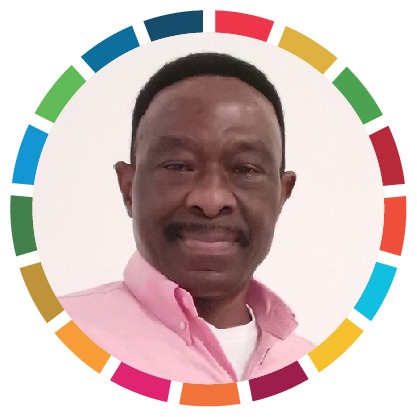 Professor Jerry Kolo (UAE) is a Professor of Urban and Regional Planning in the School of Architecture and Design at the American University of Sharjah (AUS), Sharjah, UAE. Prior to joining AUS in 2008/2009, he was a Professor at Florida Atlantic University, Fort Lauderdale, Florida, USA, where he also founded and directed an applied research center, Center for Urban Redevelopment and Empowerment (CURE). His areas of teaching and research specialization are urban economic development, environmental planning and sustainable community planning. Jerry has an extensive consulting track record in the areas of municipal economic development, university-community partnerships, and community empowerment. For his community and public service, Jerry has earned several awards, including the State of Florida Governor’s Public Service Award in 1994, and the Florida African-American Achiever’s Award in 1999.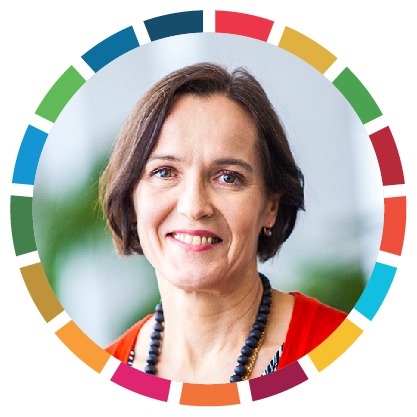
Professor Liisa Laakso (Helsinki - Finland) Liisa Laakso has acted in different national and international positions of trust including the Finnish Government’s Research and Innovation Council. Currently she is member of the Human Rights Committee of the Council of Finnish Academies. Before joining the Nordic Africa Institute she served as the Rector of the University of Tampere and before that as the Dean at the University of Helsinki, Faculty of Social Science. She was a professor and UNESCO Chair at the University of Jyväskylä in 2004, in the field of Development and International Cooperation.
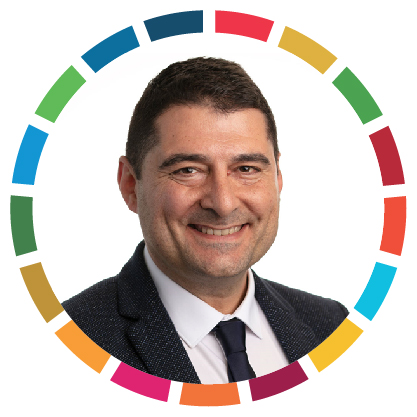
Professor Manuel Frutos-Perez (Cambridge - UK) is the Chief Academic Officer at the digital division of Cambridge Education Group. He leads the strategic planning process across a wide portfolio of Higher Education partnerships, with a focus on international market intelligence, academic excellence, and outstanding learner support. He is also a Visiting Professor in Online Education and Digital Innovation at the University of Hull, UK, and a Visiting Professor in Digital Learning at the Academic Practice Directorate, University of the West of England, Bristol, UK. Manuel is an international technology expert promoting the advancement of learning and teaching in Higher Education, and regularly delivers thought leadership keynotes at international events.
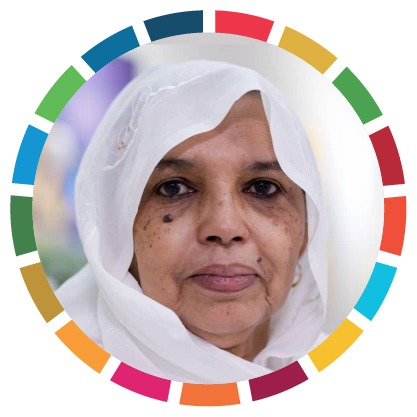
Professor Intisar Soghayroun (Khartoum - Sudan) is the Former Minister of Higher Education and Scientific Research in Sudan (September 2019 - October 2021) and Professor of Archaeology at the Department of Archaeology, Faculty of Arts, University of Khartoum(1991-2022). Expert at The Institute of Arabic Manuscripts June 2023 up to present. She has special interest in the theoretical archaeology, Islamic civilization, Archaeology and Museums studies, Ancient technologies, Theatrical Archaeology as well as Gender Archaeology. A research fellow at Bergen University, Norway in 2008 and ST, John’s college/Cambridge University, UK in 2000 and held a number of administrative positions at University of Khartoum such Dean, Faculty of Arts, and Dean, Deanship for Scientific Research. A member of national, regional and international associations of Archaeologists. Also worked as a consultant for a numbers of organizations such as Ethiopia-Sudan Power System Interconnection, Red Sea Power Plant, SMEC International PTY LTD and Consultancy Service for lake Nasser/Nubia Watershed. A member of United Nations General Assembly Science Summit (UNGASS) 2021 up to present.
Professor Muhammad Aziz Rahman (Melbourne - Australia) is an experienced academic, a medical doctor and a public health professional. Following completion of medical graduation (MBBS), he completed his post-graduation in Public Health (MPH, PhD). Currently, he is working as the Associate Dean of Research at the Institute of Health and Wellbeing and the Professor of Public Health at Federation University Australia in Melbourne. Professor Rahman has been working in the areas of public health research and teaching for more than 20 years, both in Australian and international settings. He has an excellent track record of providing leadership in completing different research and community projects successfully, focusing on different aspects of public health, securing funding, producing high-quality research publications, supervising higher degree research students, assisting in capacity building and providing supportive supervision to the early/mid-career researchers and collaborating successfully with experienced researchers. Professor Rahman has published more than 200 research papers in multidisciplinary journals with more than 135,000 citations. Due to his extraordinary track record of research citations, he has been ranked amongst the world’s top 2% scientists for the last five years (2020-25), ranking done by Elsevier BV and Stanford University, USA. He has contributed to generating over $13 million in funding in his professional career. He has extensive international research collaborations with over 25 countries and has successfully led several multi-country research projects with significant outputs. Professor Rahman is also actively engaged with professional communities through different leadership roles. He is the Vice President at the Public Health Association of Australia (PHAA), the largest organisation for public health professionals in Australia.
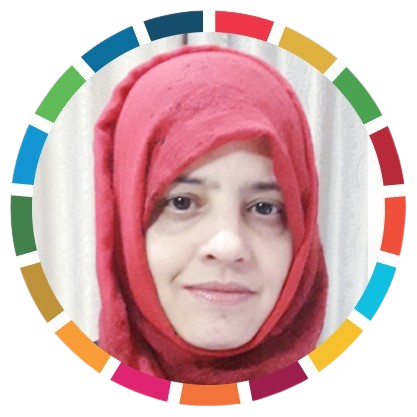
Professor Arshi Naim (London - UK) is recognised among the Top 2% Scientists globally by Stanford University and Elsevier, is a distinguished academic with over 23 years of experience in business management, digital marketing, higher education, quality assurance, and academic leadership. A prolific researcher, she has published 115+ Scopus-indexed papers in high impact journals and contributed to academic books with leading publishers such as Wiley, Springer, Elsevier, Emerald, Taylor & Francis, IGI Global, Nova Science, and Bentham Science.
Dr Mohamed Hassan-Sayed (Southampton - UK) is the Founder and Director of Chemical Engineering programs at the University of Southampton. He is an experienced academic with a demonstrated history of working in higher education and industry for 20 years. Skilled in Chemical and Energy systems, a Chartered Energy Engineer From the Energy Institute and a Chartered Engineer from the Institute of Engineering and Technology as well chartered Manager from the Chartered Management institute. He developed and taught a range of Energy and Chemical Engineering courses at the undergraduate, master's and doctoral levels in Kuwait, Saudi, Egypt and the UK. A strong engineering professional with over 95 publications and several books and contributions; supervised 20 PhD projects to conclusion. A Fellow of the Higher Education Academy in the UK. And several certifications in Engineering Business, Management, and innovation. Mohamed Developed the Energy and Petroleum courses at the Australian College in Kuwait then became an Associate Professor for 6 years at the American University in Cairo, where he helped in developing the Energy and Petroleum engineering courses leading to ABET acerdation and participated in the Education Development Program for Egyptian Universities and has previously taught at Suez Canal University and many other private universities such as the British University in Egypt. He also developed and lead the course in Energy and Petroleum Engineering at the University of Portsmouth for six years achieving accreditation through the Engineering council (energy institute) in the UK.
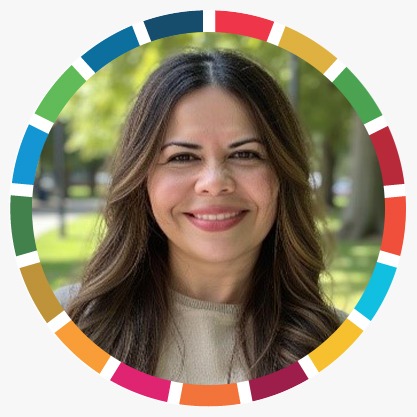
Professor Luisa Maure (Panama City - Panama) is a Full Professor at the Faculty of Natural, Exact, and Technology Sciences of the University of Panama. With a Bachelor's in Mathematics (UP), a Master's in Mathematics and its Didactics (UAEH, México), and a PhD in Didactics of Mathematics and Experimental Sciences (University of Barcelona), she has dedicated her career to transforming mathematics education. She leads the GIEM21 research group, fostering innovation in teacher training and inclusive education. As president of the APANAC Congress 2023 and a member of Panama’s National Research System (SNI-SENACYT), she promotes science for development. Her work aligns with the Sustainable Development Goals (SDGs), especially in quality education (SDG 4) and gender equality (SDG 5). She has collaborated internationally to advance educational policies and was honored with the title Cavaliere of the Order of the Star of Italy for her contributions to science diplomacy and academic cooperation.
Dr Rawad Hammad (London - UK) is a computer scientist with 20 years of experience in academic research, teaching, industry and leadership. Research interests include the use of Software Engineering, Artificial Intelligence and disruptive technologies for Technology-Enhanced Learning (TEL), e-health and Smart Cities. His expertise lies in the application of innovative technologies from Artificial Intelligence, Semantics, Business Process Management, and Data Management in multi-disciplinary application domains including TEL and e-health. Rawad is the leader of two MSc Programmes and a Technology-Enhanced Learning Research Group. He is also co-director and co-founder of a newly established Smart Health Centre at the University of East London. Moreover, Rawad has been working on large-scale collaborative EU and international projects such as: DECUMANUS, TRANSFER and SmartTech which established collaboration with international partners from UK, Japan, Germany, Finland, the EU and the Middle East. Moreover, Rawad delivered a few keynote speeches and received a considerable number of research awards, the latest was the outstanding paper 2021 by Emerald Publishing. He is an executive committee member of the international society of Artificial Intelligence in Education (AIED), and a panel member of different research journal/conference communities such as EC-TEL, IARIA, WASD, MEKEI, in addition to IEEE, ACM.
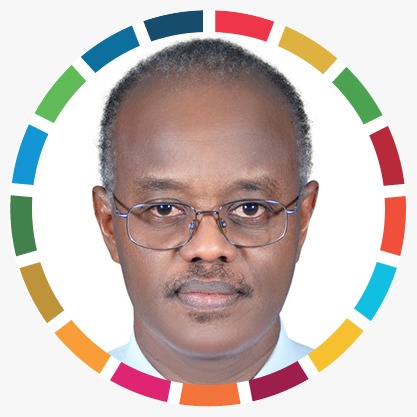 Dr Ibrahim Alfaki (UAE) is an Associate Professor of statistics in the Department of Statistics and Business Analytics at the United Arab Emirates University (UAEU). His research focuses on applied econometrics, spatial and statistical modeling, and data-driven policy analysis, with particular applications in road safety systems, economic and financial analytics, and the measurement of knowledge-based economies. His work emphasises the use of quantitative and data analytics methods, such as time series and econometric modeling, to support evidence-based decision-making and institutional performance evaluation. Professor Alfaki has contributed to national policy research, including the UAE Human Development Reports, in collaboration with government and international organizations. He has also served on the Scientific Committee of the Abu Dhabi Statistics Centre. In addition, he is a member of editorial advisory boards of several international journals, including WJEMSD, WJSTSD, and IJIKMMENA. His work reflects a sustained contribution to statistical applications in sustainable development and public policy.