• ABOUT
    arrow_drop_down
    • Overview
    • Director’s Message
    • Team
    • Contact Us
  • Teaching
    arrow_drop_down
    • Overview
      arrow_drop_down
      • Framework
      • Pedagogy
    • Universities
      arrow_drop_down
      • SDGs Universities
      • African Universities
        arrow_drop_down
        • Sudan Universities
      • Arab Universities
        arrow_drop_down
        • Gulf Universities
          arrow_drop_down
          • Qatar Universities
          • Bahrain Universities
          • Kuwait Universities
          • Emirates Universities
          • Oman Universities
          • KSA Universities
      • Islamic Universities
      • Women Universities
    • Programmes
      arrow_drop_down
      • PhD/DBA
      • MSc/MBA
      • PG Diploma
      • PG Certificate
    • Courses
    • Faculty
    • Admisison
  • Research
    arrow_drop_down
    • Research Tracks
    • Publishing
  • Consultancy
    arrow_drop_down
    • Experts By Subject
      arrow_drop_down
      • Sustainable Development
        arrow_drop_down
        • Sustainable Development Goals
        • Voluntary National Reviews
        • Climate Change
      • Higher Education
        arrow_drop_down
        • E-Learning
      • Digitalisation
        arrow_drop_down
        • Digital Transformation
        • Artificial Intelligence
        • Knowledge Management
          arrow_drop_down
          • Smart KM
      • Health and Wellbeing
        arrow_drop_down
        • Healthcare Leadership
        • Public Health
        • Diagnostic Radiology
      • Policy and Strategy
        arrow_drop_down
        • Public Policy
      • Business and Management
        arrow_drop_down
        • Marketing
    • Who’sWho Network
      arrow_drop_down
      • Global Who’sWho
        arrow_drop_down
        • Join
      • Women Who’sWho
      • Diaspora Who’sWho
      • Arab Who’sWho
      • Africa Who’sWho
      • Sudan Who’sWho
        arrow_drop_down
        • Doctors
    • Interactive Map
      arrow_drop_down
      • Global
      • Arab
      • African
      • Sudan
        arrow_drop_down
        • Doctors
      • Women
  • Training
    arrow_drop_down
    • Overview
    • Search All
      arrow_drop_down
      • Forthcoming
      • Past
      • Search by Levels
        arrow_drop_down
        • Diploma
        • Programmes
        • Courses
      • Search By Subject
        arrow_drop_down
        • Sustainability Masterclass
          arrow_drop_down
          • Economy
          • Sustainability
        • Public Policy
          arrow_drop_down
          • Public Policy
          • Education
          • Higher Education
          • Health
            arrow_drop_down
            • Covid-19
          • Women
          • Youth
            arrow_drop_down
            • Security
        • Digital Transformation
          arrow_drop_down
          • Artificial Intelligence
          • Data Science
          • Digital Transformation
          • Innovation
          • Knowledge Management
          • Technology Transfer
        • Business & Management
          arrow_drop_down
          • Entrepreneurship
          • HRM
          • Leadership
          • Management
          • Performance Improvement
          • Investment
    • Workshops
    • Programmes
  • Partnerships
  • Resources
    arrow_drop_down
    • Videos
    • Books
    • Digital Library
    • Book Store
  • Media
    arrow_drop_down
    • Videos
    • Gallery
  • Latest News
  • FAQs
Sign in or Register

Mastering Public Policy for the Implementation of the UN SDGs 

  • Send an email
  • Other Courses
  • Overview
  • Support
  • Learning Outcome
  • Programme
  • Assessment
  • Resources
  • Target Participants
  • Faculty
  • Registration
  • Gallery
  • Books
  • prev
  • next
  • Get directions
  • Other Courses
  • Share
  • prev
  • next
Overview

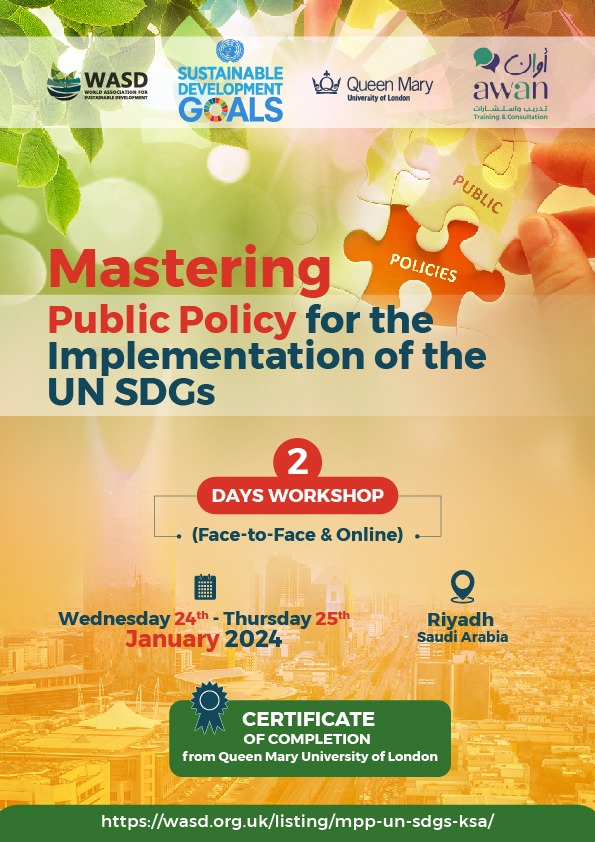
Mastering Public Policy for the Implementation of the United Nations Sustainable Development Goals   REGISTER

TWO DAYS COURSE  - Wednesday 24th - Thursday 25th January 2024       
Sheraton, Riyadh - Saudi Arabia

Part One (Concepts, methodologies and policy formulation) 
Part Two (Industry and practice) 
Part Three (Global experiences, lessons learned and countries-specific cases) 

Certificate of Completion from Queen Mary University of London

The course has been designed to introduce a variety of fundamental perspectives on public policy analysis and formulation to achieve the United Nations (2015) Agenda 2030 for Sustainable Development and its 17 Sustainable Development Goals (SDGs). The course aims to discuss and explore the various approaches and different ways (in different countries) that can contribute to policy analysis, formulation, implementation, monitoring and evaluation.

This course will critically address the question of how countries can achieve the 17 SDGs of the 2030 Agenda and to provoke forward thinking on developing new methods and approaches to suit the challenges and opportunities of this new era of digital revolution particularly post Covid-19 global pandemic. These new approaches call for actions to create different appropriate ways of doing things and of doing new things that will be essential to solve our future problems and help in the implementation of the 17 SDGs of the 2030 Agenda. Systematic search for opportunities is important for helping to ameliorate the many problems facing countries. We must therefore produce, consume and organise ourselves differently.

This integrative course aims to develop a deeper understanding of the theoretical and practical aspects to public policy and executive leadership, and to develop the essential skills and competencies necessary to plan, monitor and formulate public policy. Executive leadership in 21st Century at all levels is becoming increasingly dynamic and complex. The course aims to discuss and explore the various approaches and different ways that can contribute to policy analysis, formulation, implementation, monitoring and evaluation. It will also provoke forward thinking on developing new methods and approaches to suit the challenges and opportunities of this new era of digital revolution. The course will therefore help participants to understand how the policy process works and develop the skills required to provide practical policy advice to relevant stakeholders.
Related Sustainable Development Goals
  • SDG15
  • SDG16
  • SDG4
  • SDG17
  • SDG3
  • SDG2
  • SDG5
  • SDG1
  • SDG6
  • SDG7
  • SDG8
  • SDG9
  • SDG10
  • SDG11
  • SDG12
  • SDG13
  • SDG14
Related Courses
  • Investment
  • Security
  • Sustainability Masterclass
  • Youth
  • Leadership
  • Women
  • Covid-19
  • Education
  • Performance Improvement
  • HRM
  • Public Policy
  • Higher Education
  • Artificial Intelligence
  • Health
  • Data Science
  • Knowledge Management
  • Technology Transfer
  • Digital Transformation
  • Management
  • Innovation
  • Entrepreneurship
  • Economy
Location

Sheraton Riyadh Hotel & Towers, Olaya Junction of King Fahad and King Abdullah Road, Riyadh, Riyadh, Saudi Arabia

Get Directions
Country/Regions
  • KSA
  • GCC
  • MENA
Social Networks
  • Facebook
  • Twitter
  • YouTube
  • LinkedIn
  • Website

Related Sustainable Development Goals
  • SDG15
  • SDG16
  • SDG4
  • SDG17
  • SDG3
  • SDG2
  • SDG5
  • SDG1
  • SDG6
  • SDG7
  • SDG8
  • SDG9
  • SDG10
  • SDG11
  • SDG12
  • SDG13
  • SDG14
Related Courses
  • SDG15
  • SDG16
  • SDG4
  • SDG17
  • SDG3
  • SDG2
  • SDG5
  • SDG1
  • SDG6
  • SDG7
  • SDG8
  • SDG9
  • SDG10
  • SDG11
  • SDG12
  • SDG13
  • SDG14
What will you learn

According to the JIU 2019 report titled “Strengthening the policy research uptake in service of the 2030 Agenda for sustainable development”, achieving the 17 SDGs of the 2030 Agenda requires evidence-based policies and planning at every level; therefore, the programme will also include substantial components on evidence-based research and policy planning.

Moreover, the course will also examine the role of the private sector together with the public sector (please refer to the United Nations Joint Inspection Unit (JIU) 2018 report on the Role of Public Private Partnerships (PPPs) in the Implementation of Agenda 2030 for more details and recommendations). Both the public and private sector organisations are confronted by environmental factors such as economic, political, sociological, technological, and legal challenges. The need for leaders at all levels to successfully meet these challenges requires a comprehensive appreciation and understanding of their roles, goals and the expected competencies.

More importantly, JIU 2016 report “Knowledge Management in the United nations Sytem“, identified the important contribution of Knowledge Management (KM) to the implementation of the new holistic and collaborative approach on which the 2030 Agenda is based. JIU argued that knowledge can be the most natural integrative factor system-wide and for all the stakeholders in the implementation of the 2030 Agenda.

  • Understanding the 17 SDGs, targets and indicators.
  • Discuss the challenges governments face in the implementation of the various SDGs.
  • Acquire the essential knowledge and relevant social science concepts and theories required for any public policy formulation to implement the SDGs.
  • Learn how to formulate public policies for the implementation of SDGs and how are policies for overall 2030 Agenda is made.
  • Find new ways of thinking and problem-solving including working and influencing dynamics in organisations, effective team and networks development.
  • During the programme, senior executives and high potential leaders from all over the world will discover new dimensions in leadership and management practices and help them lead their organisations/countries initiatives to implement the SDGs.
  • Develop the skills required to define and critically analyse policy problems, articulate decision-making criteria and propose and evaluate alternative policy solutions.
  • Learn how to manage various public policy initiatives using a unique Digital Program Delivery to ensure digitally enabled transformation for your organisation.
  • During the course, participants will discover new dimensions in leadership and management practices to help them lead their organisations public policy initiatives.
Benefits for Employers
  • Understand evolving international requirements for achieving the 17 SDGs of the 2030 Agenda and systematic approach to policy analysis and formulation.
  • Describe the nature, significance and characteristics of each stage of the policy process (i.e. agenda setting, formulation, adoption, implementation and evaluation) and explain the various influences on each stage.
  • The opportunity for employers to showcase their role in different stages and levels during the process of policy formulation.
  • After completion of the course, participants (supported by their tutor) will be required to write a report describing what they have learnt and what is particularly relevant to their employers. They will be given the choice to focus on one single perspective or to build a hybrid model that will help their employers to achieve their strategic and tactical goals. This will help reassure the employers of the benefits of the programme and help consolidate managers’ understanding.
Programme Structure
  1. The course will be facilitated by the best experts from all over the world to provide participants within the public and private sectors worldwide with the best scientific and management solutions to implement effective public policy in their organisations to achieve 17 SDGs of the 2030 Agenda.
  2. There will be an activity or set of activities for each session. These will be designed to help you engage with the introduction to the theories explored within the course.
  3. Your tutor will be on hand to guide you through the course and will expect you to bring personal experience and reflection on the topics covered.
  4. Group work will be required for participants to engage in the course. Such activity allows participants to embed the new knowledge within their experience through active discussion and challenge.

Abbreviations

(AI) Artificial Intelligence
(DCs) Developing Countries
(COP) Conference of the Parties
(DT) Digitally Transformation
(DS) Data Science
(FDI) Foreign Direct Investment
(KM) Knowledge Management
(SD) Sustainable Development
(SDGs) Sustainable Development Goals
(SMEs) Small and Medium Enterprises
(TT) Technology Transfer
(UN) United Nations

Programme Day One

(09:00-09:15) Arrival Refreshments and Networking

(09:15 - 10:45) Session One  

  • Introduction to the course and the organisation.
  • Understand SD, the UN 17 SDGs and SDGs targets, indicators and data.
  • Challenges governments face in the implementation of SDGs post Covid-19.

(10:45 - 11:00) Tea/Coffee Break and Networking

(11:00 - 12:30) Session Two

  • What is the UN system?
  • Agenda 2030 and previous global agendas.
  • National reporting: where are we now!

(12:30 - 13:15) Pray, Lunch Break and Networking

(13:15 - 14:45) Session Three

  • Global developments in FDI and TT.
  • Entrepreneurship and SMEs - dynamic growth processes.
  • Case Study Analysis: UN Report "The UN System – Private Sector Partnership Arrangements in the Context of the 2030 Agenda"

END OF DAY ONE

Programme Day Two

(09:00-09:15) Arrival Refreshments and Networking

(09:15 - 10:45) Session Four  

  • Introduction to policy, public policy and policy making process.
  • Science, technology and innovation policy.
  • National policies and strategies for knowledge-based economy.

(10:45 - 11:00) Tea/Coffee Break and Networking

(11:10 - 12:30) Session Five

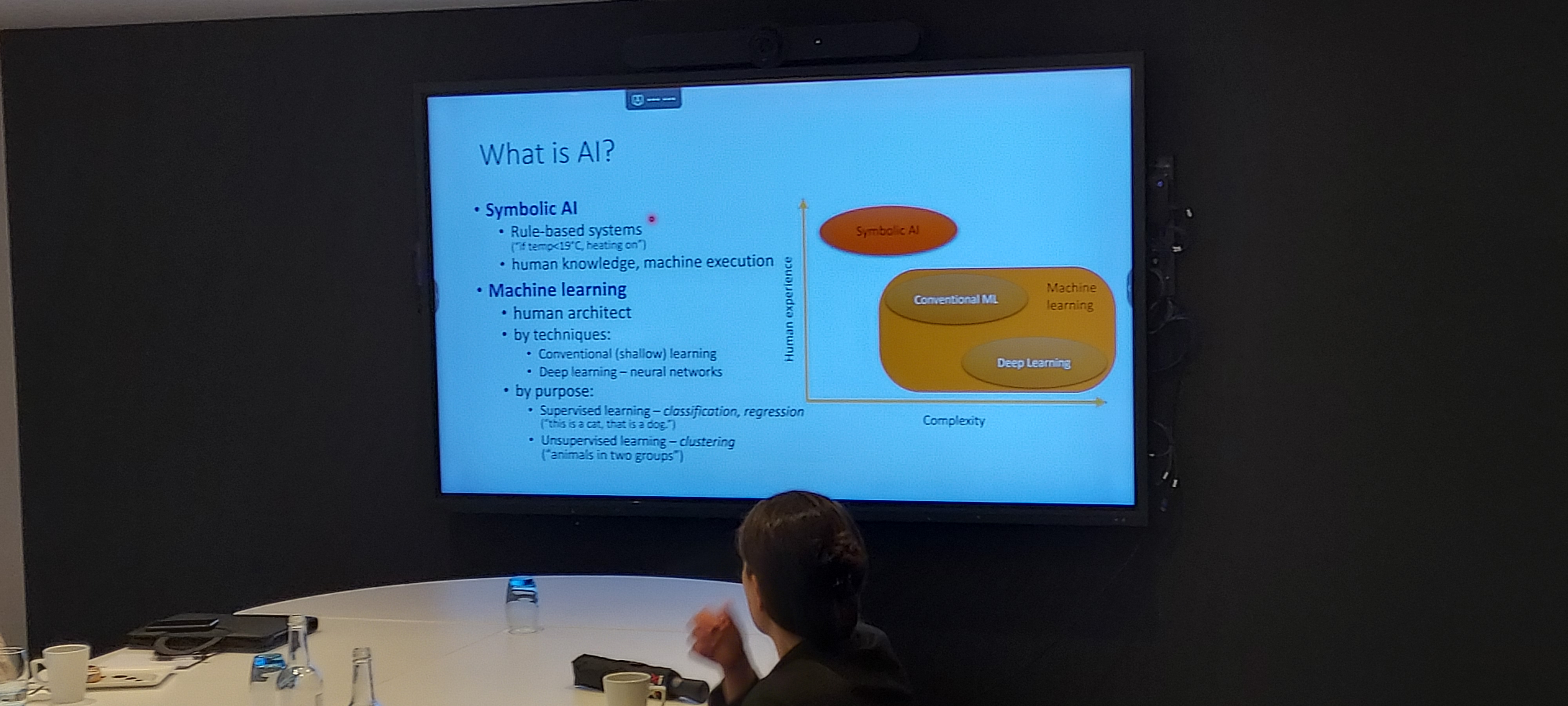
  • Introduction to AI and its role in achieving SDGs.
  • Policy implementation.
  • Managing change and transformation process.

(12:30 - 13:15) Pray, Lunch Break and Networking

(13:15 - 14:45) Session Six

  • Case Study Analysis: UN Report "Strengthening the policy research uptake in service of the UN Agenda 2030 for SD".
  • Case Study Analysis: UN Report "KM in the UN system"
  • Case Study Analysis: UN Report "UN policies and platforms in support of learning: towards more coherence, coordination and convergence"

END OF COURSE

🚀 View Past Participants
Target Participants
  1. The course covers materials for all levels from supervisory through to senior level.
  2. Government officials: minsters, undersecretaries, directors, etc.
  3. Private sector: CEOs, managers and directors responsible for transformation, project, programme, performance, excellence, knowledge, innovation or change management.
  4. Experienced managers who have significant futures oriented management responsibilities, and who are interested in reflecting on their own experience and discovering new ideas.
  5. Academics including vice chancellors, deans, heads of departments, researchers and students who are interested in leadership and in being part of an engaging educational experience that explore the challenges and opportunities that face organizations.
  6. Youth, NGOs (voluntary) and civil society groups (public).
  7. Professionals, SMEs, Start-ups and other stakeholders.

The workshop is designed and will be delivered by the world's top and renowned experts on sustainable development, public policy and leadership:

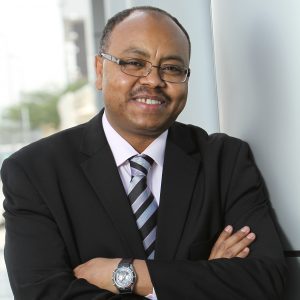
Professor Allam Ahmed (United Kingdom)
Professor of Knowledge Management and Sustainable Development; Founding President World Association for Sustainable Development; Founding Director SDGs Universities Initiatives; and Honorary Professor Faculty of Medicine and Dentistry and Senior Policy Fellow Global Policy Institute, Queen Mary University of London. He is a Fellow (FCIM) and Chartered Marketer of the Chartered Institute of Marketing (CIM), UK; Fellow (FFPH) Faculty of Public Health, UK; PhD in Economics in two years at Edinburgh Napier University, UK; awarded the Royal Agricultural University (RAU) Scholarship and Prestigious Book Prize for Best MSc/MBA Dissertation; Listed in the Who’s Who in the World 2009-2021 and 2021 Who’s Who in the World Lifetime Achievement Award, Who’s Who in Finance and Business 2009/2010 and Who’s Who in America 2012-2014 published by Marquis Who’s Who, USA.

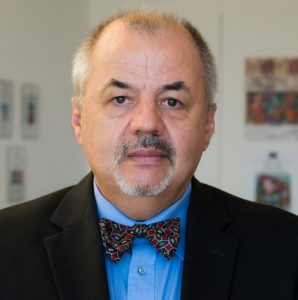
Ambassador (Ret) Dr. Petru Dumitriu (Switzerland)
Senior Fellow and Lecturer on Multilateral Diplomacy postgraduate courses, Diplo Foundation/University of Malta and Editor of numerous United Nations Joint Inspection Unit reports including: Blockchain applications in the UN system: towards a state of readiness, Policies and platforms in support of learning: towards more coherence, coordination, and convergence, Strengthening the policy research uptake in service of the 2030 Agenda for SD, Role of PPPs in the Implementation of Agenda 2030, Knowledge Management in the UN System

Contact Us
To register/enquire about this course and all our various comprehensive list of courses and workshops and if you have any question and/or if you would like to request a training workshop/program not listed in our portfolio please contact our Academic Director Professor Arshi Naim at: arshi@wasd.org.uk with a copy to admin@wasd.org.uk.

Sheraton Riyadh Hotel & Towers, Olaya Junction of King Fahad and King Abdullah Road, Riyadh, Riyadh, Saudi Arabia

Get Directions
Registration and Fees

Included in the workshop fee, the following learning materials will be provided:

  1. Admission to all sessions including all coffee/tea breaks and lunches.
  2. All overhead slides (PDF).
  3. Case studies (print and video).
  4. Copy of one volume of World Sustainable Development Outlook book series.
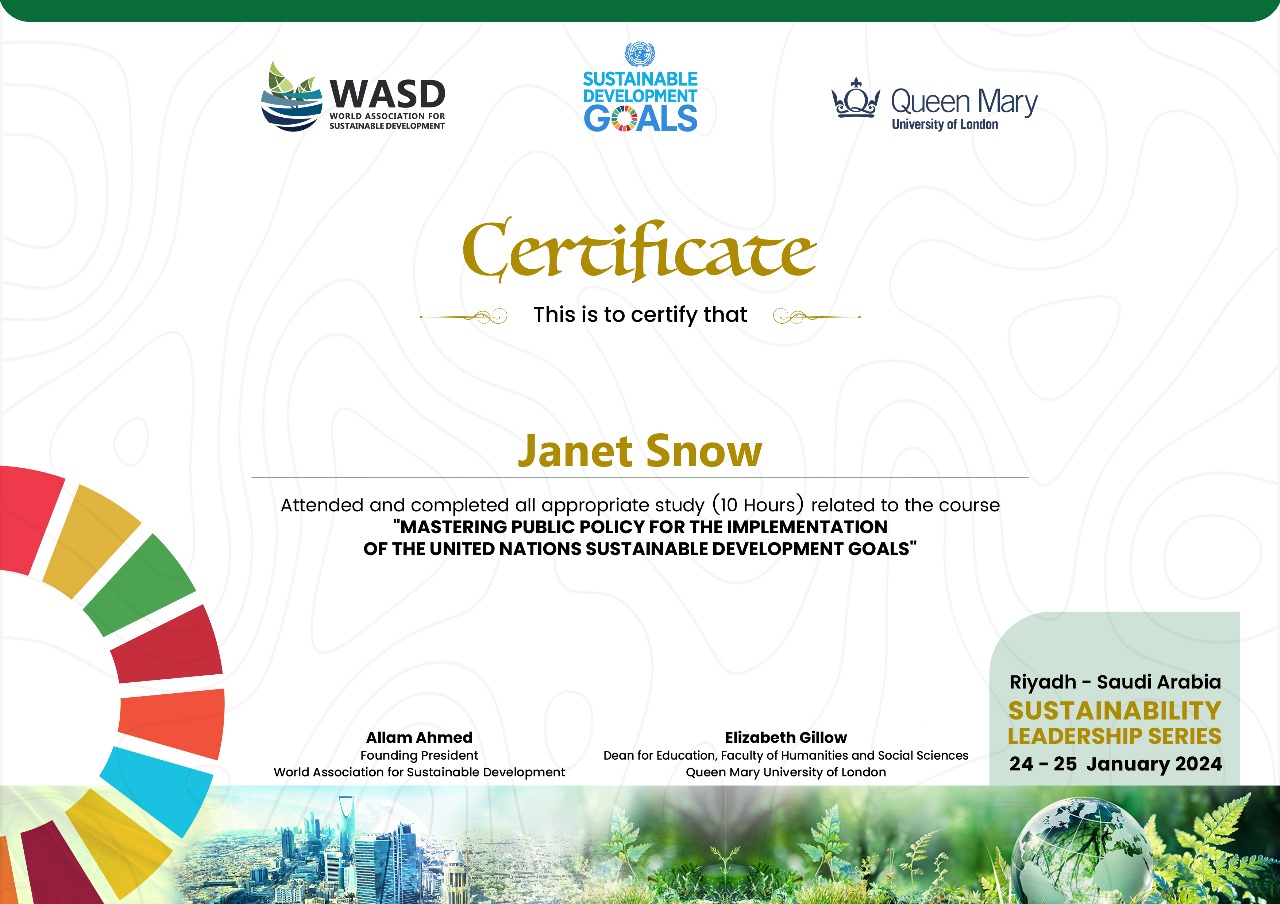
  5. Certificate from Queen Mary University of London and WASD.
Gallery

You May Also Be Interested In

Artificial Intelligence and Knowledge Management for Effective Leaders

Artificial Intelligence and Knowledge Management for Effective Leaders 18 Hours Course (Face to Face and…
  • Phone Number
  • SDG4
  • +3

Female Pelvic Medicine and Reconstructive Surgery (UROGYNAECOLOGY)

Female Pelvic Medicine and Reconstructive Surgery (UROGYNAECOLOGY)      REGISTER 48 Hours Course Friday…
  • Phone Number
  • SDG4
  • +4

Digital Transformation and Sustainable Development for Future Women Leaders

18 July 2023 This two-day course will be facilitated by world renowned experts in Digital Transformation…
  • Phone Number
  • SDG4
  • +2

The London Institute of Sustainable Development (LISD), founded under the auspices of the World Association for Sustainable Development (WASD), is a global centre committed to advancing the United Nations 2030 Agenda and its 17 Sustainable Development Goals (SDGs) through higher education, research, training, and consultancy.
Facebook-f Youtube Twitter Linkedin Flickr

Quick Links

  • About LISD
  • Gallery
  • Teams
  • Contact Us
  • Book Store

EXPERTS

  • Global Who’sWho
  • Women Who’sWho
  • Diaspora Who’sWho
  • Arab Who’sWho
  • Africa Who’sWho
  • Sudan Who’sWho

Get in touch

© LISD

All rights reserved

Cart

  • Facebook
  • Twitter
  • WhatsApp
  • Telegram
  • LinkedIn
  • Tumblr
  • VKontakte
  • Mail
  • Copy link