• ABOUT
    arrow_drop_down
    • Overview
    • Director’s Message
    • Team
    • Contact Us
  • Teaching
    arrow_drop_down
    • Overview
      arrow_drop_down
      • Framework
      • Pedagogy
    • Universities
      arrow_drop_down
      • SDGs Universities
      • African Universities
        arrow_drop_down
        • Sudan Universities
      • Arab Universities
        arrow_drop_down
        • Gulf Universities
          arrow_drop_down
          • Qatar Universities
          • Bahrain Universities
          • Kuwait Universities
          • Emirates Universities
          • Oman Universities
          • KSA Universities
      • Islamic Universities
      • Women Universities
    • Programmes
      arrow_drop_down
      • PhD/DBA
      • MSc/MBA
      • PG Diploma
      • PG Certificate
    • Courses
    • Faculty
    • Admisison
      arrow_drop_down
      • Fee Structure
        arrow_drop_down
        • Postgraduate Diploma
        • MBA/MSc
      • Scholarship
  • Research
  • Consultancy
    arrow_drop_down
    • Experts By Subject
      arrow_drop_down
      • Sustainable Development
        arrow_drop_down
        • Sustainable Development Goals
        • Voluntary National Reviews
        • Climate Change
      • Higher Education
        arrow_drop_down
        • E-Learning
      • Digitalisation
        arrow_drop_down
        • Digital Transformation
        • Artificial Intelligence
        • Knowledge Management
          arrow_drop_down
          • Smart KM
      • Health and Wellbeing
        arrow_drop_down
        • Healthcare Leadership
        • Public Health
        • Diagnostic Radiology
      • Policy and Strategy
        arrow_drop_down
        • Public Policy
      • Business and Management
        arrow_drop_down
        • Marketing
    • Who’sWho Network
      arrow_drop_down
      • Global Who’sWho
        arrow_drop_down
        • Join
      • Women Who’sWho
      • Diaspora Who’sWho
      • Arab Who’sWho
      • Africa Who’sWho
      • Sudan Who’sWho
        arrow_drop_down
        • Doctors
    • Interactive Map
      arrow_drop_down
      • Global
      • Arab
      • African
      • Sudan
        arrow_drop_down
        • Doctors
      • Women
  • Training
    arrow_drop_down
    • Overview
    • Search All
      arrow_drop_down
      • Forthcoming
      • Past
      • Search by Levels
        arrow_drop_down
        • Diploma
        • Programmes
        • Courses
      • Search By Subject
        arrow_drop_down
        • Sustainability Masterclass
          arrow_drop_down
          • Economy
          • Sustainability
        • Public Policy
          arrow_drop_down
          • Public Policy
          • Education
          • Higher Education
          • Health
            arrow_drop_down
            • Covid-19
          • Women
          • Youth
            arrow_drop_down
            • Security
        • Digital Transformation
          arrow_drop_down
          • Artificial Intelligence
          • Data Science
          • Digital Transformation
          • Innovation
          • Knowledge Management
          • Technology Transfer
        • Business & Management
          arrow_drop_down
          • Entrepreneurship
          • HRM
          • Leadership
          • Management
          • Performance Improvement
          • Investment
    • Workshops
    • Programmes
  • Partnerships
  • Resources
    arrow_drop_down
    • Videos
    • Books
    • Digital Library
    • Book Store
  • Media
    arrow_drop_down
    • Videos
    • Gallery
  • Latest News
  • FAQs
Sign in or Register

Urogynaecology Part 1 (Essential)

  • Send an email
  • Other Courses
  • Overview
  • Support
  • Learning Outcome
  • Programme
  • Assessment
  • Resources
  • Target Participants
  • Faculty
  • Registration
  • Gallery
  • Books
  • prev
  • next
  • Get directions
  • Other Courses
  • Share
  • prev
  • next
Overview

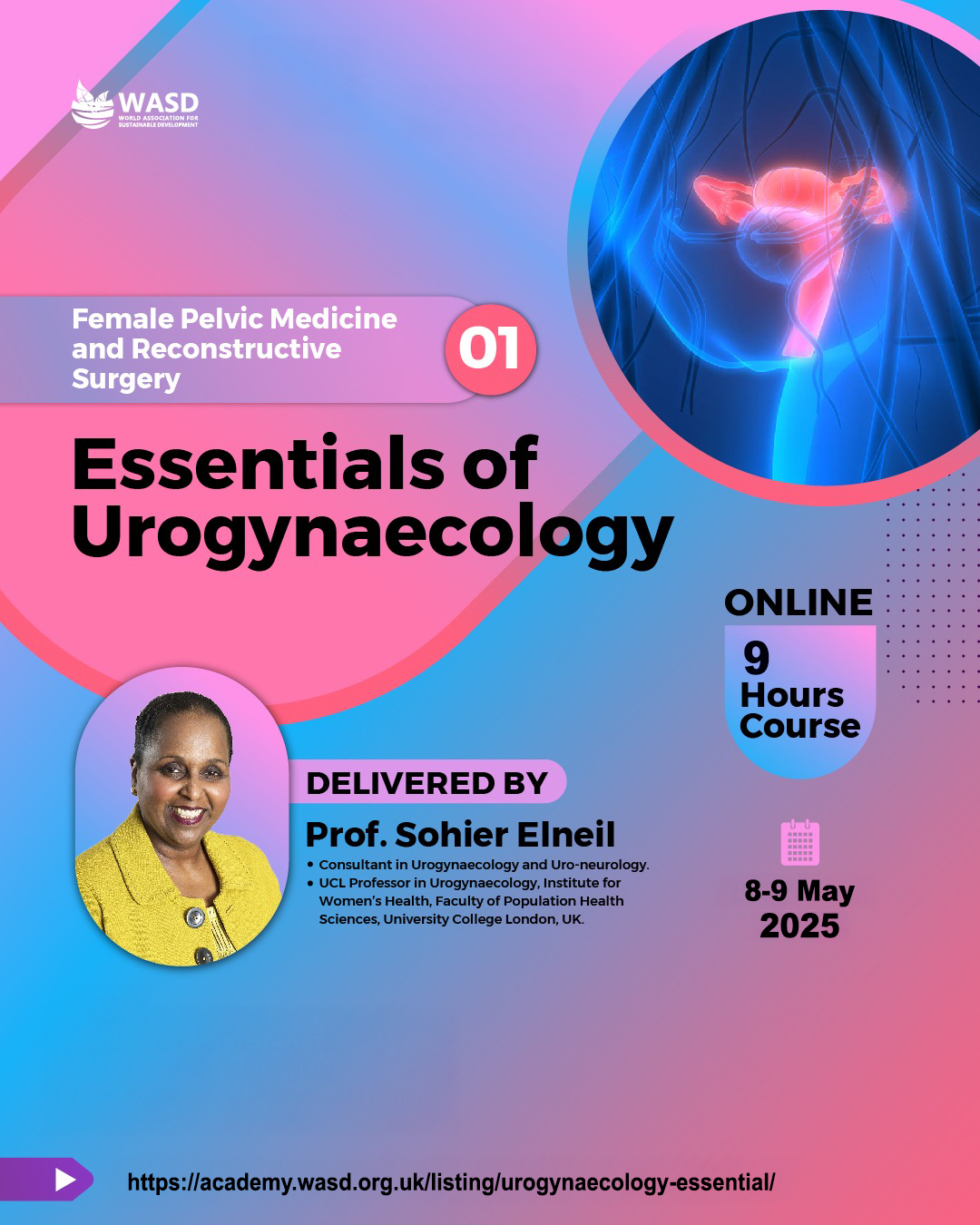
Essential Urogynaecology (Female Pelvic Medicine and Reconstructive Surgery)      REGISTER

Two Days (9 Hours) Workshop
Online 
Thursday 8th - Friday 9th May 2025

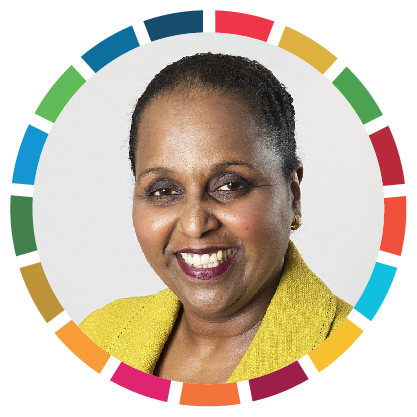
Delivered by Professor Sohier Elneil
Consultant in Urogynaecology and Uro-neurology
UCL Professor in Urogynaecology, Institute for Women’s Health, Faculty of Population Health Sciences, University College London, United Kingdom

Every year, an estimated 15 to 20 million women globally develop a reproductive morbidity. These conditions not only compromise the health and wellbeing of the women themselves but also have profound ripple effects on their children, families, and communities. Many women experience reduced dignity, an inability to care for dependents, lost productivity, diminished income, and difficulty in managing daily responsibilities-responsibilities that are often substantial and unrelenting.

Some of these morbidities are acute and life-altering, occurring suddenly during or after childbirth and may be treated relatively quickly if recognized. Others develop more gradually into chronic, debilitating conditions that impact a woman’s quality of life over time. Conditions such as pelvic organ prolapse (POP), urinary incontinence (UI), and chronic pelvic pain are examples. These and similar disorders are collectively known as Female Pelvic Medicine and Reconstructive Surgery (FPMRS), also referred to as Urogynaecology.

This suite of courses is designed to:

  1. Provide an up-to-date overview of FPMRS conditions in 2025, incorporating global perspectives.
  2. Equip healthcare professionals with the tools to investigate FPMRS conditions within both resource-rich and constrained settings.
  3. Offer a practical guide to the management of FPMRS conditions, incorporating evidence-based, trauma-informed, and culturally sensitive practices.
  4. Present strategies for the prevention of FPMRS conditions, with a focus on community education and culturally aligned public health initiatives.
  5. Highlight the societal impact of FPMRS-including reduced productivity, healthcare burden, and long-term economic effects—particularly in settings where conditions like obstetric fistula and female genital mutilation (FGM) remain prevalent.

This course is intended for clinicians and affiliated healthcare professionals who wish to better understand the complexity of FPMRS conditions, their wide-reaching consequences, and the modern, holistic approaches needed to manage them. It promotes a multidisciplinary, collaborative model of care and emphasizes the importance of empathy, communication, and patient empowerment.

By integrating clinical skill development with public health awareness and gender equity, this course will help practitioners deliver the highest standard of care across the continuum-from prevention and early intervention to complex surgical management and long-term rehabilitation.

The core mission of this curriculum is to enhance and elevate the expertise of clinicians and allied professionals in this vital and evolving field of women’s health.

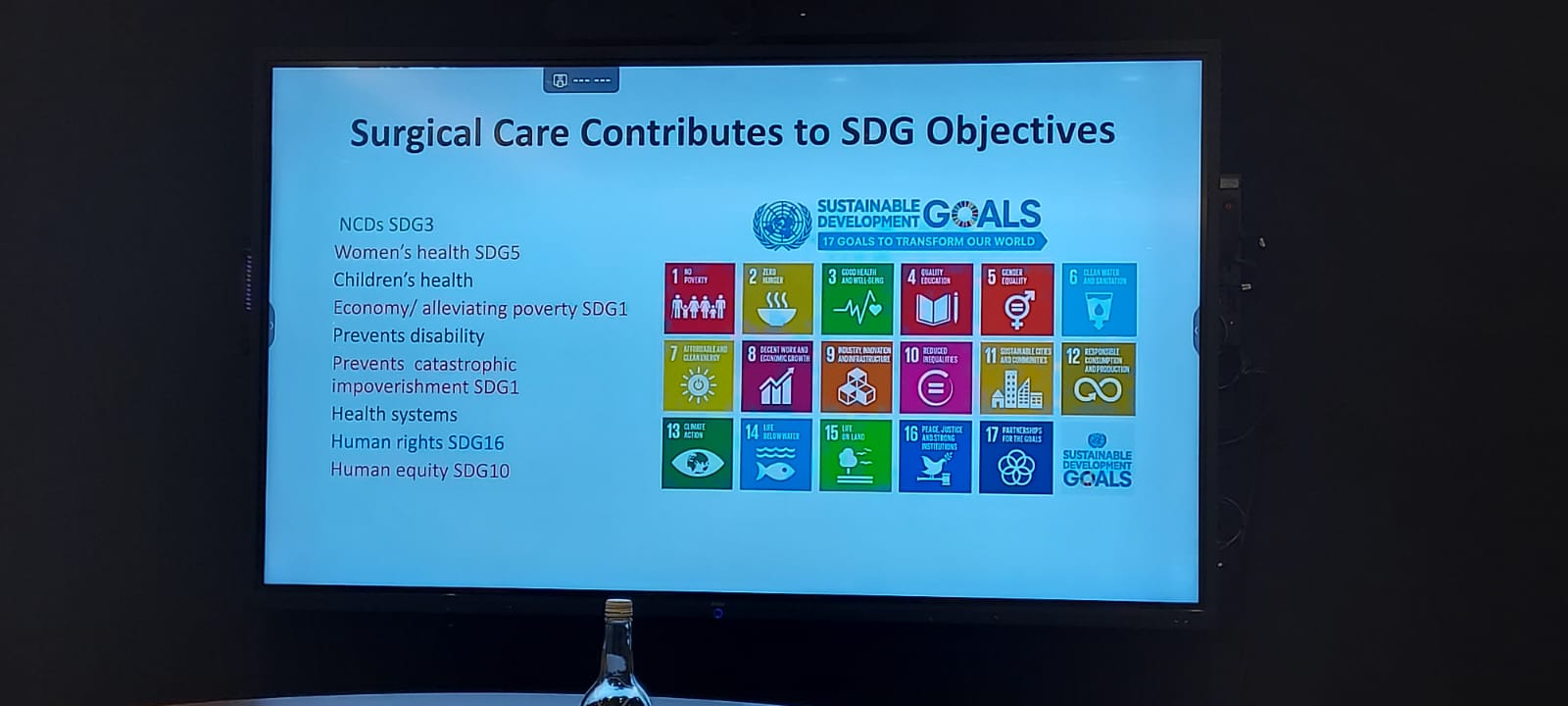
Related Sustainable Development Goals
  • SDG4
  • SDG3
  • SDG5
  • SDG8
  • SDG9
Related Courses
  • Leadership
  • Management
  • Health
Location

Queen Mary University of London, England EC1M 6BE, United Kingdom

Get Directions
Country/Regions
  • Europe
  • UK
Social Networks
  • Facebook
  • Twitter
  • YouTube
  • LinkedIn
  • Website

Related Sustainable Development Goals
  • SDG4
  • SDG3
  • SDG5
  • SDG8
  • SDG9
Related Courses
  • SDG4
  • SDG3
  • SDG5
  • SDG8
  • SDG9
What will you learn

FPMRS Conditions Included in the Course

Category Conditions
Incontinence
    1. Urodynamic stress incontinence
    2. Detrusor overactivity / Overactive bladder syndrome
    3. Voiding disorders and urinary retention
Pelvic Organ Prolapse
    1. Primary pelvic organ prolapse
    2. Recurrent pelvic organ prolapse
Bladder and Bowel Organ Disorders
    1. Urinary disorders in pregnancy
    2. Urinary disorders in childhood
    3. Urinary disorders in hormone deficiency states
    4. Urinary problems secondary to medical disorders and drugs
    5. Lower urinary tract and lower gastrointestinal tract fistulae
    6. Obstetric anal sphincter injury (OASIS)
    7. Lesions of the CNS affecting urinary, faecal control, and pelvic floor
Other Conditions
    1. Chronic pelvic pain
    2. Evaluation and care of the elderly
    3. Care of the physically or mentally handicapped
    4. Emotional and behavioural disorders
    5. Effects of pelvic surgery and irradiation on the lower bowel, urinary tract, and pelvic floor
    6. Sexually transmitted diseases
    7. Symptoms associated with sexual intercourse (e.g., coital incontinence)

Module Tiers

There are three tiers of expertise and professional development (Essential, Advanced and Expert), including gaining a thorough understanding of the impact of pregnancy, parturition, menopause and ageing on the pelvic floor and the lower urinary tract function.

Key Features Across All Levels

  1. Culturally sensitive framework respecting faith, language, and gender norms
  2. Focus on interdisciplinary teamwork and evidence-based care
  3. Emphasis on patient empowerment, psychosocial impact, and advocacy
LEVEL ESSENTIAL ADVANCED EXPERT
Target Group Junior clinicians, General OB-GYNs, Nurses, Physiotherapists

Subspecialist trainees,

Experienced OB-GYNs

Urologists

FPMRS consultants Service leads Academic faculty
Curriculum

Time Commitment

3 Online sessions

    • 3 hours each
    • 3 weeks

Optional Face to Face session - 6 hours

3 Online sessions

    • 3 hours each
    • 3 weeks

Optional Face to Face session – 6 hours

3 Online sessions

    • 3 hours each
    • 3 weeks

Optional Face to Face session - 6 hours


Benefits for Employers

The course participants will have the opportunity to showcase their role in different fields with their employers. After completion of the course, participants (supported by their tutor with additional fee) will be given the opportunity to write a report describing what they have learnt and what is particularly relevant to their employers. The report will focus on one single perspective or to build a hybrid model that will help their employers to achieve their strategic and tactical goals. This will help reassure the employers of the benefits of the programme and help consolidate managers’ understanding.

Programme Structure

Module Duration

ONE Week per tier (with online and optional in-person components). But there are key regional considerations that will need to be considered depending on where the training is offered.

Key Regional Considerations

  1. High prevalence of pelvic floor disorders (PFDs) due to large family sizes, limited antenatal/postnatal care, and high parity.
  2. Cultural sensitivity and stigma around discussing urinary, sexual, and pelvic issues.
  3. Prevalence of Female Genital Mutilation (FGM) in some areas (e.g., Egypt, parts of Sudan, Somalia).
  4. Limited access to advanced diagnostics/surgical technologies in some settings.
  5. Underrepresentation of women in surgical training and leadership roles.
  6. Increasing awareness of mesh complications and medico-legal issues, but limited patient advocacy frameworks.

Contents

The suite of courses consists of three  modules for each tier, as outlined below:

LEVEL DOMAIN CONTENT
Essential
(Core)
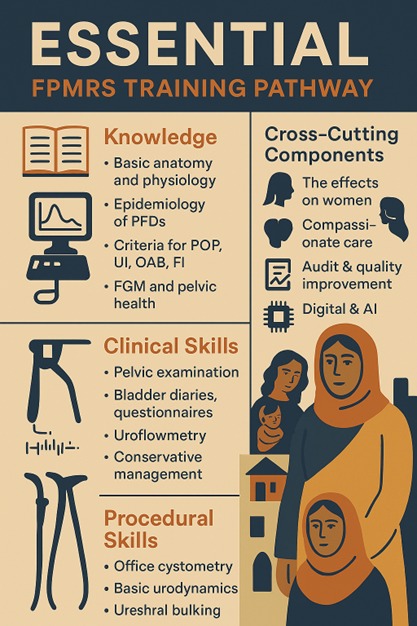
Knowledge
    1. Basic pelvic and neuroanatomy
    2. Physiology of micturition, defecation, sexual function
    3. Epidemiology of PFDs
    4. Diagnostic criteria for POP, UI, faecal incontinence, OAB
    5. Awareness of FGM and implications for pelvic health
Clinical Skills
    1. Basic pelvic exam (including POP-Q)
    2. Use of bladder diaries and questionnaires
    3. Uroflowmetry and post-void residual measurement
    4. Conservative management (lifestyle advice, pelvic floor exercises)
Procedural Skills
    1. Office cystometry
    2. Basic urodynamics interpretation
    3. Urethral bulking injections
    4. Pessary fitting and management
Advanced Knowledge
    1. Pathophysiology and classification of POP/UI
    2. Connective tissue disorders (e.g., EDS)
    3. Childbirth trauma, menopause, obesity, surgery impacts
    4. Neurological conditions affecting the pelvic floor
    5. Legal/ethical aspects of mesh
    6. Cultural competence and trauma-informed care
Clinical Skills
    1. Advanced urodynamic interpretation
    2. Pelvic floor imaging (ultrasound, MRI)
    3. Management of mesh complications
    4. Management of chronic pelvic/bladder pain (e.g., interstitial cystitis)
Procedural Skills
    1. MUS placement (retropubic/transobturator)
    2. Vaginal repairs (anterior/posterior colporrhaphy, vault suspension)
    3. Laparoscopic sacrocolpopexy
    4. Botox for OAB
    5. Sacral neuromodulation (test + implant)
Expert Knowledge
    1. Leadership in MDT and patient safety
    2. Emerging therapies (e.g., regenerative medicine, AI)
    3. Public health and policy (e.g., gender equity, litigation)
    4. International pelvic health issues (e.g., obstetric fistula, FGM, conflict trauma)
Clinical and Academic Skills
    1. Complex revision surgery
    2. MDT case planning and ethical leadership
    3. Supervising and mentoring
    4. Conducting clinical trials
    5. Advocacy, publication, and guideline development
Procedural Mastery
    1. Mesh explantation and complex reoperations
    2. Robotic pelvic floor surgery
    3. Complex combined procedures (e.g., colorectal-FPMRS crossover)

Modified Curriculum for the Middle East (Structured by level)

DOMAIN ESSENTIAL (CORE) ADVANCED EXPERT
Knowledge - Pelvic anatomy/physiology
- POP/UI/OAB basics
- FGM awareness
- Cultural sensitivity in care
- Detailed knowledge of obstetric trauma
- Mesh controversies in local context
- Role of religion in health decisions
- Health disparities in refugee and rural populations
- Policy frameworks for women's health rights in Islamic contexts
Clinical Skills - History taking in culturally appropriate ways
- Use of interpreters
- Pessary and bladder diary use
- Urodynamic skills (where available)
- Management of mesh-injured women
- Chronic pelvic pain with psychosocial context
- Complex multi-repair planning (e.g., FGM + prolapse)
- Interdisciplinary case reviews
- Building trauma-informed clinics
Procedural Skills - Conservative management focus
- Simple in-clinic procedures (bulking, cystometry)
- Vaginal prolapse repair
- Sling surgeries (including audit of outcomes)
- SNM for refractory cases (if resources exist)
- Mesh removal (in major centres)
- Laparoscopic/robotic prolapse surgery
- International mentoring/training roles
Teaching/Research - Teaching nurses and GPs
- Basic audit cycles
- Local guideline adaptation
- Presenting at regional FPMRSsocieties
- Building regional research networks
- Publishing Middle Eastern data
- Training program development
Professional Practice - Privacy, consent, and family involvement in decisions - Legal awareness of malpractice claims
- Religious/cultural barriers to consent and surgery
- Advocacy for pelvic floor clinics
- Legal-medical interface for mesh cases
- Leadership in women's health governance
Ethics and Law - Informed consent in patriarchal systems - Navigating family/legal/religious consent frameworks - Expert opinion for law/policy
- Development of women's rights frameworks in surgical health

Additional Recommendations

  1. Language training for providers (Arabic, Farsi, etc.).
  2. Promote female provider recruitment and mentorship.
  3. Use telehealth to bridge access gaps in remote or conservative regions.
  4. Integrate faith-based narratives where appropriate to reduce stigma.
  5. Strengthen collaboration with NGOs, religious leaders, and women's rights organizations.
Programme Day One
SESSION TITLE TOPICS COVERED LEARNING METHODS EVALUATION METHODS
Session 1 Anatomy, Physiology, and Foundations of PFDs • Pelvic and neuroanatomy
• Physiology of micturition, defecation, sexual function
• Epidemiology of PFDs
• POP, UI, OAB, faecal incontinence
• Impact of FGM on pelvic health
- Interactive lecture with diagrams
- Live quizzes
- Breakout case-based learning
- Video-based anatomy reviews
- Pre/post MCQs
- Case-based knowledge quiz
- Reflective log on FGM and dignity in care

Cross-Cutting Components Across All Sessions

COMPONENT HOW IT’S INTEGRATED
Communication and Compassionate Care Woven into all case discussions, especially trauma, post-mesh injury, and culturally sensitive care role plays
Audit and Quality Improvement Introduced via reflection tasks and group projects in Sessions 2 and 3
Patient-Reported Outcomes (PROMS) Highlighted through use of validated symptom questionnaires and outcome-based decision-making
Digital and AI Literacy in Urogynae Introduced in diagnostic tools (uroflowmetry, bladder diaries, pelvic floor imaging) and mentioned in each session
Programme Day Two
SESSION

TITLE

TOPICS COVERED

LEARNING METHODS

EVALUATION METHODS

Session 2

Clinical Assessment and Conservative Management

• Focused pelvic floor history
• Bladder diaries and symptom scoring
• POP-Q exam demo
• Uroflowmetry and PVR
• Lifestyle and conservative care

- Virtual patient interactions
- Demonstration videos
- Case-based group discussions
- Simulation checklist exercises

- Virtual OSCE checklist
- Peer-reviewed case assessment
- Faculty scoring of assessment

Session 3

Introductory Procedures and Office-Based Management

• Office cystometry
• Basic urodynamics interpretation
• Urethral bulking intro
• Pessary fitting and follow-up
• Choosing first-line treatments

- Recorded procedures
- Case reviews
- Clinical QandA
- Treatment planning simulations

- Management plan evaluation
- Clinical reasoning quiz
- Peer/tutor feedback on proposed plans

Cross-Cutting Components Across All Sessions

COMPONENT HOW IT’S INTEGRATED
Communication and Compassionate Care Woven into all case discussions, especially trauma, post-mesh injury, and culturally sensitive care role plays
Audit and Quality Improvement Introduced via reflection tasks and group projects in Sessions 2 and 3
Patient-Reported Outcomes (PROMS) Highlighted through use of validated symptom questionnaires and outcome-based decision-making
Digital and AI Literacy in Urogynae Introduced in diagnostic tools (uroflowmetry, bladder diaries, pelvic floor imaging) and mentioned in each session

Professor Sohier Elneil is the first Professor of Urogynaecology at University College London and is a Consultant of Urogynaecology and Uro-neurology. She is based at University College Hospital and the National Hospital for Neurology and Neurosurgery in London. Her career spans several decades looking after women with complications following female genital mutilation (FGM), childbirth trauma, including fistula, and of ageing on the pelvic floor . The effects on women’s lives were destructive, and it galvanized her to undertake research into the medicine and science of pelvic floor disorders in women including incontinence, prolapse, chronic pelvic pain, and neurological dysfunction of the pelvic floor.

In recognition of her work, Sohier is the recipient of many awards and has been selected to write policy documents of national importance. In 2014, she authored the chapter on incontinence and prolapse for the Chief Medical Officer’s annual report 'The Health of the 51%: Women' report’. This proved to be a seminal policy document that continues to impact healthcare today. In 2018, she received several national awards voted for by the National Patients Association and the greater British public; and in 2021, in the centenary year of the London Surgical Society (LSS), she was awarded the Simpson Smith Memorial Medal for surgery. This award was jointly sponsored by the Royal College of Surgeons.

Sohier has a sustained track record of excellence in both clinical and scientific research, knowledge transfer, global reach, student personal and professional development and empowering the voices of women globally in their own health care. She has pioneered the application of truly integrated, patient supported, and holistic care pathways in pelvic floor medicine and surgery, which has facilitated innovative and safe treatment in this space. This advance is transformative for many, enabling them to not only to improve their health and quality of life, but to ensure it is individualized and safe care. She continues to have great passion to develop new opportunities to expand our understanding of the complexity of pelvic floor disorders in women, and in so doing further improve their lives and that of their families.

Prizes, Awards and Other Honours

  • 2021: Simpson Smith Medal in Surgery.
  • 2018: Daily Mail NHS Health Hero Award, Presented by Rt Hon Prime Minister Theresa May.
  • 2018: NHS Patient Association and BBC One Show Health Hero Award (70th NHS Anniversary).
  • 2018: Recognition Award, Sudan Doctors Association.
  • 2009: One of the Most important Muslim Women in Great Britain, Sunday Times Awards.

🚀 View Past Participants
Target Participants
  1. The course covers materials for all levels from junior through to senior professionals in healthcare sectors.
  2. Organization Strategists and Policy Makers: Those who want to know more about how women with chronic FPMRS conditions, who have limited access to healthcare, can impact the workforce and productivity.
  3. Clinicians: Medical, Nursing, Physiotherapists, Academics, Psychologists, Social workers, and Paramedical workers
  4. Healthcare Associated Professionals: Operation managers, Administrators, Human Resource managers, and Quality and Safety teams. Their comprehension and understanding of FPMRS clinical conditions can help them plan services better.
  5. Organization Strategists and Policy Makers: Those who want to know more about how women with chronic FPMRS conditions, who have limited access to healthcare, can impact the workforce and productivity.

The course is designed and will be delivered by one of the world's top and renowned expert on female pelvic medicine and reconstructive surgery, global health, and women’s leadership, Professor Sohier Elneil

Professor Elneil is the first Professor of Urogynaecology at University College London and is a Consultant of Urogynaecology and Uro-neurology. She is based at University College Hospital and the National Hospital for Neurology and Neurosurgery in London. Her career spans several decades looking after women with complications following female genital mutilation (FGM), childbirth trauma, including fistula, and of ageing on the pelvic floor . The effects on women’s lives were destructive, and it galvanized her to undertake research into the medicine and science of pelvic floor disorders in women including incontinence, prolapse, chronic pelvic pain, and neurological dysfunction of the pelvic floor.

In recognition of her work, Sohier is the recipient of many awards and has been selected to write policy documents of national importance. In 2014, she authored the chapter on incontinence and prolapse for the Chief Medical Officer’s annual report 'The Health of the 51%: Women' report’. This proved to be a seminal policy document that continues to impact healthcare today. In 2018, she received several national awards voted for by the National Patients Association and the greater British public; and in 2021, in the centenary year of the London Surgical Society (LSS), she was awarded the Simpson Smith Memorial Medal for surgery. This award was jointly sponsored by the Royal College of Surgeons.

Sohier has a sustained track record of excellence in both clinical and scientific research, knowledge transfer, global reach, student personal and professional development and empowering the voices of women globally in their own health care. She has pioneered the application of truly integrated, patient supported, and holistic care pathways in pelvic floor medicine and surgery, which has facilitated innovative and safe treatment in this space. This advance is transformative for many, enabling them to not only to improve their health and quality of life, but to ensure it is individualized and safe care. She continues to have great passion to develop new opportunities to expand our understanding of the complexity of pelvic floor disorders in women, and in so doing further improve their lives and that of their families.

Prizes, Awards and Other Honours

  • 2021: Simpson Smith Medal in Surgery.
  • 2018: Daily Mail NHS Health Hero Award, Presented by Rt Hon Prime Minister Theresa May.
  • 2018: NHS Patient Association and BBC One Show Health Hero Award (70th NHS Anniversary).
  • 2018: Recognition Award, Sudan Doctors Association.
  • 2009: One of the Most important Muslim Women in Great Britain, Sunday Times Awards.
Contact Us
To register/enquire about this course and all our various comprehensive list of courses and workshops and if you have any question and/or if you would like to request a training workshop/program not listed in our portfolio please contact our Academic Director Professor Arshi Naim at: arshi@wasd.org.uk with a copy to admin@wasd.org.uk.

Queen Mary University of London, England EC1M 6BE, United Kingdom
Get Directions
Registration and Fees

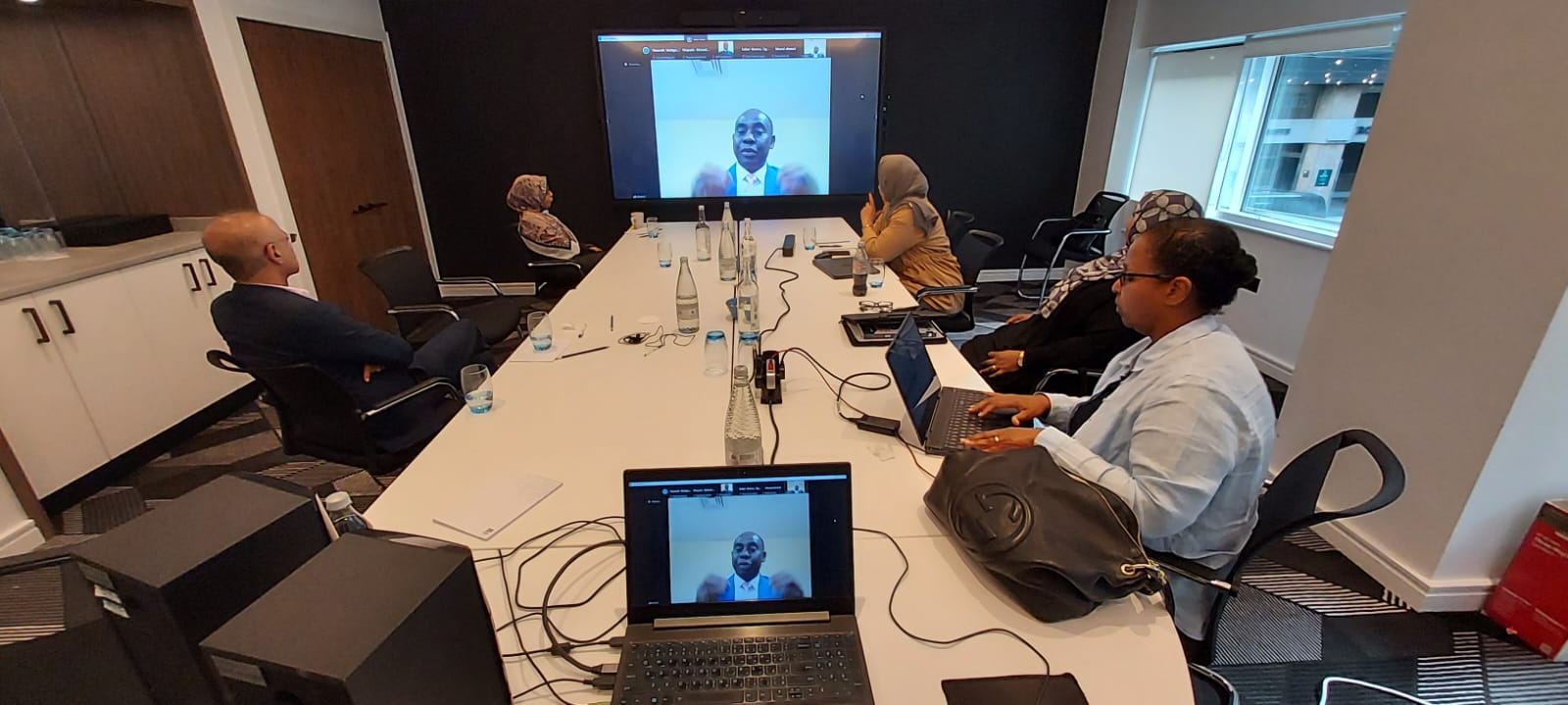
The course will be delivered either face-to-face or online via video conferencing facilities using Zoom Application. Included in the course fee, the following learning materials will be provided:

  • Admission to all sessions.
  • All overhead slides (PDF format).
  • Case studies (print and video).
  • Certificate of attendance from Queen Mary University of London and WASD.
Gallery

You May Also Be Interested In

Artificial Intelligence and Knowledge Management for Effective Leaders

Artificial Intelligence and Knowledge Management for Effective Leaders 18 Hours Course (Face to Face and…
  • Phone Number
  • SDG4
  • +3

Female Pelvic Medicine and Reconstructive Surgery (UROGYNAECOLOGY)

Female Pelvic Medicine and Reconstructive Surgery (UROGYNAECOLOGY)      REGISTER 48 Hours Course Friday…
  • Phone Number
  • SDG4
  • +4

Digital Transformation and Sustainable Development for Future Women Leaders

18 July 2023 This two-day course will be facilitated by world renowned experts in Digital Transformation…
  • Phone Number
  • SDG4
  • +2

The London Institute of Sustainable Development (LISD), founded under the auspices of the World Association for Sustainable Development (WASD), is a global centre committed to advancing the United Nations 2030 Agenda and its 17 Sustainable Development Goals (SDGs) through higher education, research, training, and consultancy.

Facebook-f Youtube Twitter Linkedin Flickr

Quick Links

  • About LISD
  • Gallery
  • Teams
  • Contact Us
  • Book Store

EXPERTS

  • Global Who’sWho
  • Women Who’sWho
  • Diaspora Who’sWho
  • Arab Who’sWho
  • Africa Who’sWho
  • Sudan Who’sWho

Get in touch

© LISD

All rights reserved

Cart

  • Facebook
  • Twitter
  • WhatsApp
  • Telegram
  • LinkedIn
  • Tumblr
  • VKontakte
  • Mail
  • Copy link