• ABOUT
    arrow_drop_down
    • Overview
    • Director’s Message
    • Team
    • Contact Us
  • Teaching
    arrow_drop_down
    • Overview
      arrow_drop_down
      • Framework
      • Pedagogy
    • Universities
      arrow_drop_down
      • SDGs Universities
      • African Universities
        arrow_drop_down
        • Sudan Universities
      • Arab Universities
        arrow_drop_down
        • Gulf Universities
          arrow_drop_down
          • Qatar Universities
          • Bahrain Universities
          • Kuwait Universities
          • Emirates Universities
          • Oman Universities
          • KSA Universities
      • Islamic Universities
      • Women Universities
    • Programmes
      arrow_drop_down
      • PhD/DBA
      • MSc/MBA
      • PG Diploma
      • PG Certificate
    • Courses
    • Faculty
    • Admisison
      arrow_drop_down
      • Fee Structure
        arrow_drop_down
        • Postgraduate Diploma
        • MBA/MSc
      • Scholarship
  • Research
  • Consultancy
    arrow_drop_down
    • Experts By Subject
      arrow_drop_down
      • Sustainable Development
        arrow_drop_down
        • Sustainable Development Goals
        • Voluntary National Reviews
        • Climate Change
      • Higher Education
        arrow_drop_down
        • E-Learning
      • Digitalisation
        arrow_drop_down
        • Digital Transformation
        • Artificial Intelligence
        • Knowledge Management
          arrow_drop_down
          • Smart KM
      • Health and Wellbeing
        arrow_drop_down
        • Healthcare Leadership
        • Public Health
        • Diagnostic Radiology
      • Policy and Strategy
        arrow_drop_down
        • Public Policy
      • Business and Management
        arrow_drop_down
        • Marketing
    • Who’sWho Network
      arrow_drop_down
      • Global Who’sWho
        arrow_drop_down
        • Join
      • Women Who’sWho
      • Diaspora Who’sWho
      • Arab Who’sWho
      • Africa Who’sWho
      • Sudan Who’sWho
        arrow_drop_down
        • Doctors
    • Interactive Map
      arrow_drop_down
      • Global
      • Arab
      • African
      • Sudan
        arrow_drop_down
        • Doctors
      • Women
  • Training
    arrow_drop_down
    • Overview
    • Search All
      arrow_drop_down
      • Forthcoming
      • Past
      • Search by Levels
        arrow_drop_down
        • Diploma
        • Programmes
        • Courses
      • Search By Subject
        arrow_drop_down
        • Sustainability Masterclass
          arrow_drop_down
          • Economy
          • Sustainability
        • Public Policy
          arrow_drop_down
          • Public Policy
          • Education
          • Higher Education
          • Health
            arrow_drop_down
            • Covid-19
          • Women
          • Youth
            arrow_drop_down
            • Security
        • Digital Transformation
          arrow_drop_down
          • Artificial Intelligence
          • Data Science
          • Digital Transformation
          • Innovation
          • Knowledge Management
          • Technology Transfer
        • Business & Management
          arrow_drop_down
          • Entrepreneurship
          • HRM
          • Leadership
          • Management
          • Performance Improvement
          • Investment
    • Workshops
    • Programmes
  • Partnerships
  • Resources
    arrow_drop_down
    • Videos
    • Books
    • Digital Library
    • Book Store
  • Media
    arrow_drop_down
    • Videos
    • Gallery
  • Latest News
  • FAQs
Sign in or Register

MBA Digital Marketing and Sustainability

  • Send an email
  • Other Courses
  • Overview
  • Support
  • Learning Outcome
  • Programme
  • Assessment
  • Resources
  • Target Participants
  • Faculty
  • Admission
  • Gallery
  • Books
  • prev
  • next
  • Get directions
  • Other Courses
  • Share
  • prev
  • next
Overview

Master of Business Administration (MBA) Digital Marketing and Sustainability 
Duration: 12 Months
Credit Hours: 180
ECTS: 90
Level: HE7
Mode of Delivery: Hybrid (Online/Onsite at different locations across the world)

Overview

The Master of Business Administration (MBA) in Digital Marketing and Sustainability at the London Institute of Sustainable Development (LISD) is a postgraduate programme designed to prepare forward-thinking leaders capable of driving digital transformation while embedding sustainable business practices across organisations and industries.
Rooted in the United Nations Sustainable Development Goals (SDGs), the programme combines advanced management education with a strong emphasis on ethical leadership, environmental responsibility, and innovation within the digital economy. It enables students to develop critical expertise in strategic digital marketing, sustainable business strategy, and responsible governance, while strengthening their ability to apply data-driven insights and digital technologies to complex business challenges.
Learners gain a deep understanding of the relationship between digital marketing, sustainability, and digital transformation, with a focus on creating value-driven and socially responsible business models. The programme equips students to evaluate and respond to global market dynamics, integrating sustainability principles into strategic decision-making and organisational development.
Graduates emerge as capable and ethical leaders, prepared to guide organisations towards resilient, innovative, and future-ready operations, balancing profitability with environmental and social impact in an increasingly interconnected and rapidly evolving global business environment.

A One of-a-Kind Initiative
At the London Institute of Sustainable Development (LISD), the MBA in Digital Marketing and Sustainability offers a transformative learning experience that integrates strategic digital marketing, innovation, leadership, and global engagement. Distinct from traditional postgraduate programmes, this course combines advanced digital marketing principles with sustainable business strategy, digital transformation, and responsible governance to provide a cohesive and practice-oriented learning journey.
Aligned with the United Nations 2030 Agenda and the Sustainable Development Goals (SDGs), the programme equips students to address real-world challenges by developing sustainable digital marketing strategies, leveraging emerging digital technologies, and applying data-driven insights to enhance organisational performance while promoting environmental and social responsibility.
Purpose-driven and globally focused, the MBA in Digital Marketing and Sustainability prepares graduates with the strategic vision, ethical awareness, and leadership capabilities required to shape organisations and industries that are competitive, digitally enabled, environmentally responsible, and socially impactful in an increasingly complex global economy.
 

Related Sustainable Development Goals
  • SDG9
  • SDG17
  • SDG16
  • SDG15
  • SDG14
  • SDG13
  • SDG12
  • SDG11
  • SDG10
  • SDG4
  • SDG8
  • SDG7
  • SDG6
  • SDG1
  • SDG5
  • SDG2
  • SDG3
Related Courses
  • Post Graduate
  • MSc/MBA
Location

London Institute of Sustainable Development (LISD), London, United Kingdom
Get Directions
Country/Regions
  • Europe
  • UK
Social Networks
  • Facebook
  • Twitter
  • YouTube
  • LinkedIn
  • Website

Related Sustainable Development Goals
  • SDG9
  • SDG17
  • SDG16
  • SDG15
  • SDG14
  • SDG13
  • SDG12
  • SDG11
  • SDG10
  • SDG4
  • SDG8
  • SDG7
  • SDG6
  • SDG1
  • SDG5
  • SDG2
  • SDG3
Related Courses
  • forthcoming
What will you learn

Learning Outcomes

  1. Demonstrate an advanced understanding of global digital marketing environments, digital transformation, and sustainable management practices.
  2. Apply strategic, analytical, and data-driven approaches to enhance digital marketing effectiveness, organisational performance, innovation, and long-term value creation.
  3. Lead with integrity and strategic vision, promoting ethical governance, inclusivity, and corporate social responsibility within digital marketing and business practices.
  4. Critically analyse complex marketing and business challenges by integrating insights from economics, digital technologies, data analytics, and sustainability principles.
  5. Drive innovation in digital marketing and transformation to improve customer engagement, operational efficiency, competitiveness, and stakeholder value.
  6. Develop and implement effective digital marketing and business strategies that support sustainable growth and organisational resilience in dynamic global markets.
  7. Communicate and collaborate effectively across multidisciplinary teams and diverse cultural and professional contexts.
  8. Demonstrate professional leadership capabilities, including adaptability, emotional intelligence, and a commitment to continuous professional development and lifelong learning.
  9. Contribute to sustainable development by aligning digital marketing strategies and business decisions with the United Nations Sustainable Development Goals (SDGs).

Learning Outcomes for Knowledge and Understanding

  1. Demonstrate an advanced understanding of digital marketing strategy, leadership theories, and sustainable management practices within a global business context.
  2. Analyse the interrelationships between governance, economics, digital innovation, data analytics, and organisational performance in shaping marketing effectiveness and business outcomes.
  3. Critically evaluate global digital marketing and business challenges, including regulatory and ethical frameworks, through the lenses of sustainability and corporate responsibility.
  4. Integrate principles of digital transformation, emerging technologies, artificial intelligence, and marketing analytics into strategic decision-making processes.

Learning Outcomes for Cognitive, Intellectual or Thinking Skills

  1. Critically evaluate digital marketing strategies and organisational performance using evidence-based reasoning and advanced analytical methods.
  2. Apply strategic and innovative thinking to design effective, data-informed marketing solutions for complex business and sustainability challenges.
  3. Synthesise multidisciplinary perspectives, including digital marketing, economics, technology, and sustainability, to inform ethical and commercially viable decisions.
  4. Reflect critically on leadership practice within digital marketing and sustainability contexts to enhance personal effectiveness and organisational impact.

Learning Outcomes for Practical, Professional or Subject-Specific Skills

  1. Design and implement applied consultancy projects or capstone initiatives addressing real-world digital marketing, business, and sustainability challenges.
  2. Lead and manage organisational change initiatives, with a focus on digital transformation, sustainable innovation, and marketing effectiveness.
  3. Communicate complex digital marketing insights, strategies, and data effectively to diverse professional audiences and stakeholder groups.
  4. Demonstrate advanced leadership, negotiation, and stakeholder engagement skills within dynamic digital marketing and organisational contexts.

Learning Outcomes for Technical or Information Technology Skills

  1. Apply digital tools, marketing analytics platforms, and emerging technologies to support strategic marketing and operational decision-making.
  2. Evaluate the impact of digital transformation, artificial intelligence, and platform-based technologies on marketing strategies, business models, and organisational performance.
  3. Manage digital collaboration, communication, and information systems effectively to enhance marketing operations and stakeholder engagement.

Learning Outcomes for Transferable, Key or Personal Skills

  1. Communicate clearly, ethically, and persuasively across digital marketing, corporate, entrepreneurial, and policy contexts.
  2. Collaborate effectively within multidisciplinary teams, demonstrating inclusivity, cultural awareness, and emotional intelligence in professional environments.
  3. Demonstrate self-awareness, resilience, and adaptability in leadership roles within dynamic marketing and business settings.
  4. Evidence a strong commitment to ethical governance, social responsibility, and sustainable digital marketing practices aligned with sustainable development principles.
Programme Structure

Support for Student Learning

The programme provides comprehensive support to ensure a successful and engaging learning experience:

  1. Academic Support – Online tutorials, workshops, and one-to-one guidance help students develop knowledge, research skills, and assessment strategies.
  2. Technical Support – Access to the online learning platform, digital tools, and software enables effective study, data analysis, and assignment work.
  3. Personal and Professional Development – Mentoring, career services, and skills workshops support leadership, employability, and professional growth.
  4. Inclusive Learning Environment – Support is provided for diverse learning needs, including study skills, wellbeing, and accessibility accommodations.
  5. Feedback and Continuous Improvement – Regular, constructive feedback on assignments, discussion contributions, quizzes, and presentations encourages reflective learning and academic progression.

Programme Structure

The programme requires the successful completion of 180 credits at HE7, including a Capstone Project, for the award of the MBA Digital Marketing and Sustainability. It prepares professionals to lead effectively in today’s complex and rapidly evolving digital marketing and business landscape, combining rigorous academic study with practical application, interdisciplinary learning, and a global perspective on sustainable and responsible business practices.

Component Credit Hours
Module One: Global Sustainability Challenges and Strategic Responses 30
Module Two: Digital Transformation, Innovation and Organisational Excellence 30
Module Three: Foundations of Sustainable Digital Marketing, Ethics and Consumer Behaviour 30
Module Four: Strategic Sustainable Digital Marketing, Innovation and Responsible Business Practice 30
Capstone Project 60
Total Credits 180

EXIT POINTS

The programme includes exit points, allowing students to leave with a recognised qualification based on the number of credits completed:

Credits Completed Qualification Awarded Duration
60 Postgraduate Certificate Digital Marketing and Sustainability 3 months
120 Postgraduate Diploma Digital Marketing and Sustainability 6 months

Exit points provide students with formal credentials even if they do not complete the full programme, recognising the learning achieved up to that stage.

Components of Modules

Module One: Global Sustainability Challenges and Strategic Responses

  1. Globalization, Global Market Place, Development and Sustainability Transitions (Allam Ahmed and Philip Kotler)
  2. Foundations of Sustainability and SD (Mohamed Hassan-Sayed)
  3. The Evolution of the Concept of Development in the History of the UN System (Petru Dumitriu)
  4. Understanding the UN 2030 Agenda and SDGs (Petru Dumitriu)
  5. Human Capital for Sustainability: Education and Health Systems (Muhammad Aziz Rahman)
  6. Climate Governance, Environmental Risk, and Corporate Sustainability (Joseph Ntayi)
  7. Energy Transition: Renewable Energy and the Nuclear Debate (Mohamed Hassan-Sayed)
  8. The AI Carbon Footprint: Data Centres, E-Waste, and Resource Scarcity (Rawad Hammad)
  9. Sustainable Urban Development, Heritage and Tourism (Intisar Soghayroun)
  10. Accounting and Financial Literacy for Non-Finance Managers (Michael Busler)

Module Two: Digital Transformation, Innovation and Organisational Excellence

  1. Digitisation and Digital Transformation (Miryem Salah)
  2. AI Transformation and Modernisation (Miryem Salah)
  3. The Emergence of International Norms on AI and Ethics (Petru Dumitriu)
  4. AI for SD and SDGs Achievement (Dhiya Al-Jumeily)
  5. Generative AI and the Future of Circular Economy (Rawad Hammad)
  6. DS and ML: Predictive Modelling for Environmental Impact (Rawad Hammad)
  7. Robotics and Autonomous Systems for Sustainable Manufacturing (Mary He)
  8. FinTech and Digital Financial Systems for SD (Malgorzata Sulimierska)
  9. Creativity and Creative Entrepreneurship in the Digital Economy (Ondřej Dvouletý)
  10. KM and Knowledge-Based Economy (Allam Ahmed)

Module Three: Foundations of Sustainable Digital Marketing, Ethics and Consumer Behaviour

  1. Evolution and principles of sustainable digital marketing
  2. The triple bottom line, stakeholder theory, and digital ecosystems
  3. Ethical frameworks in digital marketing, data ethics, and corporate responsibility
  4. Sustainable consumption in digital marketplaces and changing consumer values
  5. Behavioural drivers of pro-environmental and ethical consumption in online environments
  6. Cultural, social, and psychological influences on sustainable digital consumer behaviour
  7. Greenwashing, digital transparency, and building consumer trust online
  8. Circular economy concepts and implications for e-commerce and digital marketing
  9. Sustainability challenges: climate change, resource scarcity, and social inequality in the digital economy
  10. Role of digital marketing in advancing the United Nations Sustainable Development Goals (SDGs)
  11. Responsible digital communication, content strategy, and sustainability messaging
  12. Regulatory and policy environment in digital marketing, including data protection and consumer rights
  13. E-commerce models (B2C, B2B, C2C, D2C) and their sustainability implications
  14. Digital platforms, marketplaces, and the role of start-ups in promoting sustainable consumption

Module Four: Strategic Sustainable Digital Marketing, Innovation and Responsible Business Practice

  1. Strategic digital marketing planning for sustainability
  2. Sustainable digital value proposition design and competitive advantage
  3. ESG (Environmental, Social and Governance) integration in digital marketing strategy
  4. Sustainable branding, digital positioning, and online reputation management
  5. Innovation in sustainable digital products, services, and platforms
  6. E-commerce strategies for sustainable growth and responsible consumption
  7. Digital business models for sustainability (including platform, circular, subscription, and sharing economy models)
  8. Sustainable supply chain management, transparency, and digital value chain integration
  9. Role of start-ups and entrepreneurial ventures in driving sustainable digital innovation
  10. Stakeholder engagement, digital communities, and co-creation of value
  11. Governance, accountability, and ethical leadership in digital organisations
  12. Impact measurement, sustainability metrics, and digital reporting (e.g. ESG dashboards, Global Reporting Initiative frameworks)
  13. Risk management, cybersecurity, and resilience in sustainable digital businesses
  14. Digital tools and technologies supporting sustainability (e.g. AI, big data, blockchain for traceability and impact tracking)
  15. Global digital marketing strategies, cross-border e-commerce, and market entry considerations

Module Five: Capstone Project

Key Stages of the Capstone Project:

  1. Project Proposal Development: Formulation of a research or consultancy proposal addressing a real-world digital marketing, business, or sustainability challenge.
  2. Literature and Industry Review: Critical review of academic and industry sources on digital marketing strategy and sustainability.
  3. Methodology Design: Selection of appropriate research or consultancy methods, using digital tools, digital marketing analytics, and ethical frameworks.
  4. Data Collection and Analysis: Application of qualitative and quantitative methods to generate digital marketing and sustainability insights.
  5. Findings and Discussion: Interpretation of results in relation to digital marketing strategy, digital innovation, and sustainability impact.
  6. Conclusions and Recommendations: Development of practical, evidence-based digital marketing and sustainability recommendations for organisations.
  7. Publication and Dissemination: Preparation of the project for professional presentation or publication to demonstrate applied impact in digital marketing and sustainability.
Assessment

The MBA in Digital Marketing and Sustainability employs a diverse and integrated assessment strategy to evaluate students’ knowledge, cognitive abilities, practical competencies, and professional development. Assessment methods include:

  • Capstone Project: An independent consultancy-style project requiring students to integrate and apply the knowledge, skills, and competencies developed throughout the programme to address a real-world business challenge related to digital marketing and/or sustainability. This demonstrates critical thinking, research capability, problem-solving, and professional communication.
  • Assignments: Written coursework, including essays, case analyses, and applied research reports, designed to assess critical evaluation, strategic thinking, and the application of theory to contemporary digital marketing strategies and sustainability contexts.
  • Discussion Forums: Online contributions and peer interactions used to evaluate engagement, reflective thinking, and the ability to articulate and debate ideas in a professional and collaborative digital environment.
  • Online Quizzes: Short formative and summative assessments to test knowledge, understanding, and the application of key concepts in digital marketing, sustainability, data analytics, and business strategy.
  • Presentations: Individual or group presentations to assess professional communication, strategic insight, problem-solving, and the ability to present complex digital marketing ideas clearly to diverse audiences.

All assessments are conducted online and submitted through the official learning platform provided to students.

Assessment Policies

  • All assessments, including capstone Project, assignments, discussion forums, online quizzes, and presentations, are conducted in accordance with institutional policies, ensuring fairness, transparency, and academic integrity.
  • The programme uses a mix of formative and summative assessments to support learning, provide feedback, and allow opportunities for improvement.
  • Late submissions, plagiarism, and other forms of academic misconduct are managed through formal procedures and may affect progression or award classification.
  • Students are required to meet minimum performance standards across all modules and assessment types in order to achieve the overall qualification.

Grade Bands and Classifications

Final grades are awarded based on aggregated performance across assessments, using a percentage system at LISD.

LISD Grading System

Classification Percentage Range UK Grade GPA (approx.) Description
First Class (1st) 70–100% A 4.0 Excellent / Outstanding
Upper Second Class (2:1) 60–69% B+ / A– 3.3–3.7 Very Good
Lower Second Class (2:2) 50–59% B / B– 2.7–3.0 Good
Third Class (3rd) 40–49% C 2.0–2.3 Satisfactory
Fail Below 40% F 0.0–1.9 Fail / Unsatisfactory

Marks Distribution for the Course

Assessment Type Weighting
Capstone Project 50%

Assignment 20%

Discussion Forum/Presentation 20%

Online Quiz 10%

Total 100%

Assessment Rubrics and Weightings

Capstone Project Rubric (50%)

Word Limit: 5,000 words ±10% (excluding references and appendices)

Criteria Description
Understanding of Topic Demonstrates comprehensive knowledge of the chosen topic, integrating digital marketing, sustainability, strategy, and management concepts.
Application to SDGs Effectively applies relevant United Nations Sustainable Development Goals (SDGs), demonstrating clear alignment with sustainable business practices, digital marketing strategy, and responsible innovation.
Analysis and Critical Thinking Provides in-depth analysis, critical evaluation, and well-reasoned arguments to address a real-world business challenge related to digital marketing and/or sustainability.
Project Design and Methodology Develops a clear and appropriate project plan, including research design, methods, tools, and implementation of digital marketing strategies relevant to organisational or industry contexts.
Innovation and Problem-Solving Demonstrates creativity and originality in proposing feasible, ethical, and sustainable business solutions, including the effective use of digital marketing technologies and data-driven approaches.
Structure and Organisation Well-structured, with clear abstract, introduction, literature review, methodology, findings, discussion, conclusion, and references in Harvard style.
Use of Sources Uses a wide range of relevant academic, industry, and professional sources accurately and consistently.
Academic Writing Clear, coherent, and professional use of English, with an appropriate academic tone and accurate referencing.
Presentation and Communication Effectively communicates findings and recommendations in a clear, structured, and professional manner.

Publication Opportunity

Students who achieve a score of 70% or above in the Capstone Project may be offered the opportunity to work with the academic team to further develop their project for potential publication in a recognised WASD journal, subject to meeting the required academic and editorial standards.

Assignment Rubric (20%)

Word Limit: 2,500 words ±10% (excluding references and appendices)

Criteria Description
Understanding of Topic Demonstrates clear knowledge of the subject and relevant digital marketing, sustainability, and business management concepts.
Application to SDGs Effectively links content to the United Nations Sustainable Development Goals and sustainable digital marketing practices.
Analysis and Critical Thinking Shows logical analysis, evaluation, and well-reasoned arguments.
Structure and Organisation Well-structured, with clear abstract, introduction, methodology (where appropriate), analysis, conclusion, and references in Harvard style.
Use of Sources Uses appropriate academic, industry, and professional references accurately.
Academic Writing Clear, accurate, and professional use of English.

Discussion Forum / Presentation (20%)

Discussion Forum

Criteria Description
Participation Regular and timely contributions to discussions.
Relevance Contributions are relevant to the topic, digital marketing context, and learning outcomes.
Engagement Responds constructively to peers, demonstrating collaborative learning.
Critical Insight Demonstrates thoughtful, analytical, and reflective contributions.
Communication Clear, respectful, and professional written communication.

Presentation

Criteria Description
Content Quality Relevant, accurate, and well-researched content within a digital marketing and sustainability context.
Application to Practice Effectively links theory to real-world digital marketing challenges, SDGs, and strategic decision-making.
Clarity and Structure Logical flow with clearly communicated key points.
Delivery Confident, clear, and professional communication.
Visual Aids Effective use of slides or supporting digital materials.

Online Quiz (10%)

Criteria Description
Knowledge Recall Demonstrates understanding of key concepts in digital marketing, sustainability, and business strategy.
Accuracy Provides correct responses to questions.
Time Management Completes the assessment within the allocated time.
Consistency Maintains consistent performance across attempts.

ASSESSMENT SUBMISSION AND MODE OF DELIVERY

  • All assessments will be conducted online and must be submitted through the official online platform provided to students.
  • Clear instructions and submission deadlines will be communicated in advance.
  • Students are responsible for ensuring that all work is submitted in the required format and within the specified timeframe.
🚀 WASD Sustainability Library
🚀 Recommended Books
Target Participants

The MBA in Digital Marketing and Sustainability is a postgraduate degree that provides a comprehensive understanding of contemporary marketing management and sustainable business strategy. It equips professionals with strategic, operational, and analytical expertise to make informed decisions and lead effectively within complex and rapidly evolving global digital marketing environments.

The MBA in Digital Marketing and Sustainability at the London Institute of Sustainable Development (LISD) integrates the United Nations Sustainable Development Goals (SDGs 1–17) within a digital marketing and business context, with a strong emphasis on ethical decision-making, responsible digital marketing practices, and sustainable value creation. Students explore areas such as strategic digital marketing, digital transformation, data-driven decision-making, sustainable business models, corporate governance, and global market dynamics.

The curriculum is strongly aligned with the UN SDGs, preparing graduates to lead organisations and industries with purpose, resilience, and a commitment to ethical, digitally enabled, and environmentally responsible digital marketing and business practices.

Facilitators

The programme will be facilitated by the best experts from all over the world to provide participants within the public and private sectors worldwide with the best scientific and management solutions to implement effective public policy in their organisations to achieve the United Nations 2030 Agenda and its 17 Sustainable Development Goals. The facilitators will be on hand to guide you through the material and will expect you to bring personal experience and reflection on the topics covered. Group work will also be required for participants to engage in the workshop. Such activity allows participants to embed the new knowledge within their experience through active discussion and challenge.

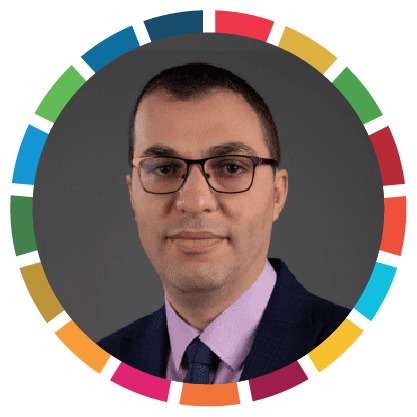
Miryem Salah (London - UK) is the director for Digital, Data & AI Transformation, Managing Director for the MSP sales channel of Vodafone Business IT hubs at VodafoneThree.Having led on major transformation across IT, digital, data, analytics and AI globally in private, public sectors. Miryem operates at the intersection of strategy, execution, culture, and impact-the space where she has consistently delivered the greatest value. She brings end‑to‑end ownership: setting direction, aligning capital and talent, and taking full accountability for outcomes. Her experience spans sectors and geographies, with leadership across the full enterprise agenda. Miryem brings strong financial and commercial acumen, with deep expertise in capital allocation, business case development, operating model design, and benefits realisation. She has led complex, multinational organisations through change under pressure-modernising infrastructure, integrating cultures, and delivering measurable improvements in customer experience, efficiency, and profitability. Building high‑performing, inclusive leadership teams with clarity, pace, and accountability. She is deeply committed to sustainability, diversity, and developing future leaders. Miryem is known for authentic leadership, decisive action, and strong stakeholder engagement at the shareholder, board & investor level.

Professor Lynette Louw (Eastern Cape -South Africa) is the Raymond Ackerman Chair of Management and Deputy Dean, Faculty of Commerce at Rhodes University in Makhanda, South Africa. Her areas of speciality include Strategic Management, International Organisational Behaviour, Cross-cultural Management and SMEs/Entrepreneurship. She has taught and/or researched in the Netherlands, Germany, Uganda and China. Previously, Lynette was a member of the MBA Higher Education Quality Committee for the Council on Higher Education (CHE) in South Africa (2003 - 2004).

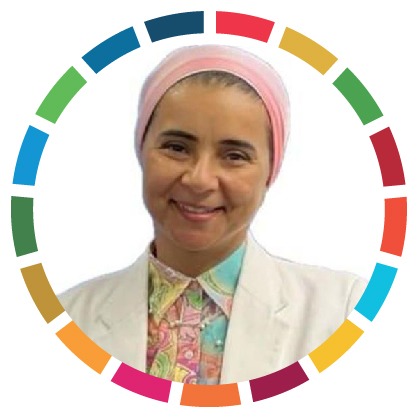
Professor Doaa Salman (Cairo - Egypt) is an esteemed Professor of Economics at the Faculty of Management Sciences at October University for Modern Sciences and Arts and a well-respected authority in the academic community. Her expertise lies in several fields of research, including Managerial Finance, Financial Institutions Management, International Economics and Trade Agreements, Money & Banking, International Banking, Feasibility Studies, Public Finance, inclusive growth, development, Health Economics and digital transformation and sustainability. She is a master of commonly used statistical tools and computer software used for cost and revenue analysis, and econometric applications such as SPSS, Stata, R, etc. She is the chief editor of the MSA-Management Sciences Journal and her research has appeared in several prestigious journals, including Economics and Policy, International Journal of Finance & Banking Studies, International Journal of Green Economics, International Journal of Development and Conflict, and Journal of Economics.

Dr Malgorzata Sulimierska (UK) is a Senior Lecturer in Banking and FinTech at the Department of Business and Management for the University of Sussex Business School and is a Fellow of the Higher Education Academy. She also has Oxford Fintech and Blockchain Qualifications from the University of Oxford, and a PhD in Financial Economics from the University of Sussex (UK). She is involved in research and teaching at numerous institutions, Lancaster University (UK), Catholic Leuven University (Belgium) and Loughborough University (UK). Her excellent teaching skills have been valued by several teaching awards, the BMEs Oscar Award for the Best seminar tutor, Excellence in Teaching Award and Student-Led Teaching Award. Her remarkable passion for teaching and discovering new areas of development guides her interests towards FinTech, Banking digitalization, Financial literature, Financial inclusions and political uncertainty.

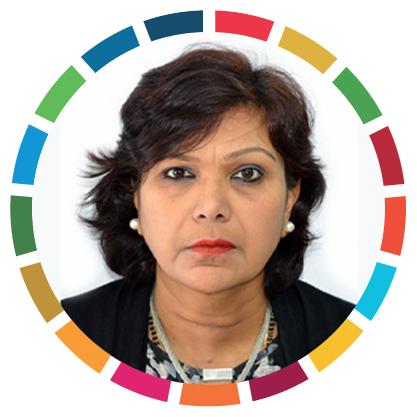
Professor Roubina Juwaheer (Mauritius) is currently a Professor of Marketing at the Department of Management, Faculty of Law and Management. She served as the Pro Vice- Chancellor (Planning and Resources) of the University of Mauritius from 2014-2017 and Dean of the Faculty from 2008-2011. As an Academic, she has several years of experience in marketing, tourism and hospitality in Mauritius and the Indian Ocean Islands and extensive teaching, industrial and consulting experience in the marketing, hospitality and tourism field. Her additional research interests include green marketing, ecotourism, service quality, customer satisfaction, advocacy for women and children, CRM and health care management. Prof. Juwaheer has also been awarded the title of ‘Africa’s Most Influential Women 2016 in Business and Government’ both at Country and Regional levels in the field of Tertiary Education Sector (Academic) in Mauritius and the Indian Ocean Region (IOC) in August 2016 by the CEO Global magazine, a media magazine that has during the previous years focused on Africa’s leading talent and sharing their success stories.

Professor Arshi Naim (London - UK) is recognised among the Top 2% Scientists globally by Stanford University and Elsevier, is a distinguished academic with over 23 years of experience in business management, digital marketing, higher education, quality assurance, and academic leadership. A prolific researcher, she has published 115+ Scopus-indexed papers in high impact journals and contributed to academic books with leading publishers such as Wiley, Springer, Elsevier, Emerald, Taylor & Francis, IGI Global, Nova Science, and Bentham Science.

Professor Liisa Laakso (Helsinki - Finland) Liisa Laakso has acted in different national and international positions of trust including the Finnish Government’s Research and Innovation Council. Currently she is member of the Human Rights Committee of the Council of Finnish Academies. Before joining the Nordic Africa Institute she served as the Rector of the University of Tampere and before that as the Dean at the University of Helsinki, Faculty of Social Science. She was a professor and UNESCO Chair at the University of Jyväskylä in 2004, in the field of Development and International Cooperation.

Professor Allam Ahmed (London - UK) is a Professor of Knowledge Management and Sustainable Development; Co-Founder of SMART KM MODEL: An Integrated Knowledge Management Framework for Organizational Excellence and led the implementation of the first of its kind in the Middle East and North Africa Knowledge Management Framework Musharaka. Founding President of WASD; SDGs Universities Initiative; Middle Eastern Knowledge Economy Institute; Fellow Faculty of Public Health, UK; Fellow Chartered Institute of Marketing, UK; and Fellow Academy of World Business, Marketing and Management Development, Australia. Prior to QMUL, Prof. Ahmed spent 15 years at the University of Sussex Science Policy Research Unit (1st science and policy think tank in the UK) where he established and led Sussex’s most successful postgraduate programme MSc International Management.

Ambassador (Ret) Dr Petru Dumitriu (Geneve - Switzerland) is a Former Ambassador and Permanent Observer of the Council of Europe to the United Nations in Geneva. Currently Senior Fellow and Lecturer on Multilateral Diplomacy postgraduate courses, Diplo Foundation/University of Malta. Former member of the United Nations Joint Inspection Unit and Editor of numerous reports including: Strengthening the policy research uptake in service of the 2030 Agenda for SD, Role of PPPs in the Implementation of Agenda 2030, Knowledge Management in the UN System

Professor Manuel Frutos-Perez (Cambridge - UK) is the Chief Academic Officer at the digital division of Cambridge Education Group. He leads the strategic planning process across a wide portfolio of Higher Education partnerships, with a focus on international market intelligence, academic excellence, and outstanding learner support. He is also a Visiting Professor in Online Education and Digital Innovation at the University of Hull, UK, and a Visiting Professor in Digital Learning at the Academic Practice Directorate, University of the West of England, Bristol, UK. Manuel is an international technology expert promoting the advancement of learning and teaching in Higher Education, and regularly delivers thought leadership keynotes at international events.

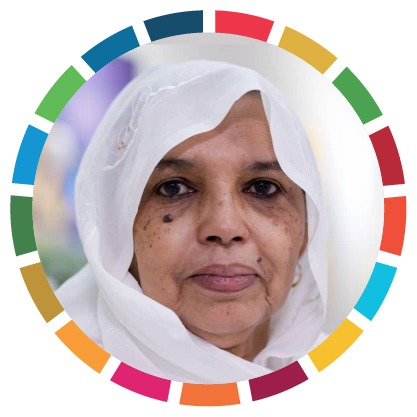
Professor Intisar Soghayroun (Khartoum - Sudan) is the Former Minister of Higher Education and Scientific Research in Sudan (September 2019 - October 2021) and Professor of Archaeology at the Department of Archaeology, Faculty of Arts, University of Khartoum(1991-2022). Expert at The Institute of Arabic Manuscripts June 2023 up to present. She has special interest in the theoretical archaeology, Islamic civilization, Archaeology and Museums studies, Ancient technologies, Theatrical Archaeology as well as Gender Archaeology. A research fellow at Bergen University, Norway in 2008 and ST, John’s college/Cambridge University, UK in 2000 and held a number of administrative positions at University of Khartoum such Dean, Faculty of Arts, and Dean, Deanship for Scientific Research. A member of national, regional and international associations of Archaeologists. Also worked as a consultant for a numbers of organizations such as Ethiopia-Sudan Power System Interconnection, Red Sea Power Plant, SMEC International PTY LTD and Consultancy Service for lake Nasser/Nubia Watershed. A member of United Nations General Assembly Science Summit (UNGASS) 2021 up to present.

Samia Melhem (Washington - USA) is a Lead Policy Specialist at the World Bank’s Digital Development and AI Vice Presidency, based in Washington DC. She manages digital government transformation operations, leveraging technologies to improve delivery of public services in all sectors. She is currently leading a large digital government investment project portfolio, and regional research on Digital Skills for Jobs; as well as AI’s impact on the digital economy. During her career at the WBG, Samia managed digital transformation projects/operations in East and Central Europe, Asia, Middle East and Africa. She authored several publications on Telecoms Policy and Regulation, Digital government, Digital Economy, Digital Capabilities and Skills, Cloud computing, Innovation and Entrepreneurship, Open data, PPP, and Bridging the gender digital divide. In May 2025, Samia received an award from the Arab League for her Digital Economy work in the MENA region. In addition to her current role at the World Bank, Samia started teaching at George Washington University.

Dr Rawad Hammad (London - UK) is a computer scientist with 20 years of experience in academic research, teaching, industry and leadership. Research interests include the use of Software Engineering, Artificial Intelligence and disruptive technologies for Technology-Enhanced Learning (TEL), e-health and Smart Cities. His expertise lies in the application of innovative technologies from Artificial Intelligence, Semantics, Business Process Management, and Data Management in multi-disciplinary application domains including TEL and e-health. Rawad is the leader of two MSc Programmes and a Technology-Enhanced Learning Research Group. He is also co-director and co-founder of a newly established Smart Health Centre at the University of East London. Moreover, Rawad has been working on large-scale collaborative EU and international projects such as: DECUMANUS, TRANSFER and SmartTech which established collaboration with international partners from UK, Japan, Germany, Finland, the EU and the Middle East. Moreover, Rawad delivered a few keynote speeches and received a considerable number of research awards, the latest was the outstanding paper 2021 by Emerald Publishing. He is an executive committee member of the international society of Artificial Intelligence in Education (AIED), and a panel member of different research journal/conference communities such as EC-TEL, IARIA, WASD, MEKEI, in addition to IEEE, ACM.

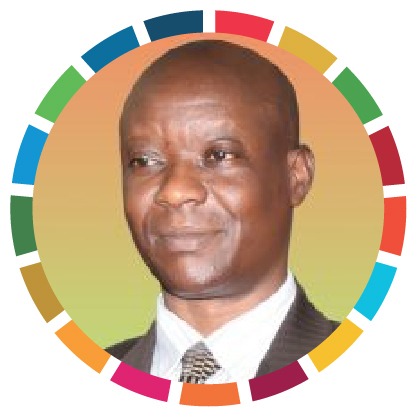
Professor Joseph Ntayi (Kampala - Uganda) is a Professor at Makerere University Business School and served as the former Dean of the Faculty of Economics, Energy, and Management Sciences at Makerere University Business School (MUBS), a position he relinquished in July 2023. Prior to this, he held several notable positions within the institution, including Dean of the Faculty of Computing and Management Science, Head of the Department of Marketing, Procurement, and Logistics Management. With over three decades of dedicated service to Makerere University, Makerere University Business School, and the government of Uganda, Prof. Ntayi has made significant contributions across various roles in Development Finance, Foreign Trade, Procurement and Supply Chain Management, Development Economics, and Strategic Management. Prof. Joseph M. Ntayi is a luminary in both the academic and professional spheres, celebrated for his profound impact as an international scholar, insightful consultant, and pioneering social entrepreneur. Prof. Ntayi has co-authored more than 200 articles for internationally acclaimed journals, covering a wide range of research interests including Development Finance, Development Economics, Microfinance, Energy Economics, Public Sector Procurement, Supply Chain and Logistics, Public Sector Marketing, Entrepreneurship, Positive Psychology, and Public health. In February 2021, 2022, January 2023, and January 2024, Prof. Ntayi received prestigious accolades from the International Scientific Scholars Forum, recognizing him as one of the top scholars in the world and acknowledging his excellence in Business & Management and Strategic Management. Furthermore, he has been recognized as the leading Strategic Management Scientist in Uganda and the Second most prominent in this field across Africa.

Dr Mohamed Hassan-Sayed (Southampton - UK) is the Founder and Director of Chemical Engineering programs at the University of Southampton. He is an experienced academic with a demonstrated history of working in higher education and industry for 20 years. Skilled in Chemical and Energy systems, a Chartered Energy Engineer From the Energy Institute and a Chartered Engineer from the Institute of Engineering and Technology as well chartered Manager from the Chartered Management institute. He developed and taught a range of Energy and Chemical Engineering courses at the undergraduate, master's and doctoral levels in Kuwait, Saudi, Egypt and the UK. A strong engineering professional with over 95 publications and several books and contributions; supervised 20 PhD projects to conclusion. A Fellow of the Higher Education Academy in the UK. And several certifications in Engineering Business, Management, and innovation. Mohamed Developed the Energy and Petroleum courses at the Australian College in Kuwait then became an Associate Professor for 6 years at the American University in Cairo, where he helped in developing the Energy and Petroleum engineering courses leading to ABET acerdation and participated in the Education Development Program for Egyptian Universities and has previously taught at Suez Canal University and many other private universities such as the British University in Egypt. He also developed and lead the course in Energy and Petroleum Engineering at the University of Portsmouth for six years achieving accreditation through the Engineering council (energy institute) in the UK.

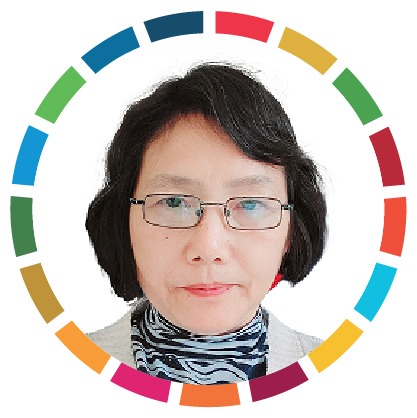
Professor Hongmei (Mary) He (Manchester - UK) is Professor of Artificial Intelligence (AI) for Robotics in the School of Science, Engineering, and Environment at the University of Salford and Turing Liaison Academic for membership of the Salford Turing University Network. She is a passionate advocate of AI and an expert in human-centred AI for trustworthy robotics and trustworthy autonomous systems (TRAS). She has also done a lot of research in cognitive cybersecurity, data science, computational theory and optimisation. She was a senior embedded systems engineer at Motorola Design House in China. Mary is Chair of the task force of AI and Edge Computing for TRAS on the IEEE Computational Intelligence Society's Technical Committee on Adaptive and Dynamic Programming and Reinforcement Learning and Chair of the IEEE UK & Ireland RAS Chapter.

Professor Michael Busler (New Jersey - USA) is a Professor of Finance at Stockton University in the USA. He has held positions at Pennsylvania State University, Delaware University, Rutgers University and Drexel University. He teaches courses in Corporate Finance, managerial economics and Entrepreneurship. Dr. Busler is a known expert in Public Policy and Economics. He has published more than 65 refereed journal articles and nearly 1000 opinion columns in major publications. In addition, he has given hundreds of interviews on both syndicated radio and on network tv stations.

Professor Rocky Dwyer (USA) is a Core Faculty Professor in the Doctor of Business Administration Program in the College of Management and Human Potential at Walden University, USA. He is a Fellow of the Royal Society of Arts, UK; a Fellow of the Society of Management Accountants and a Fellow of the Chartered Professional Accountants of Canada. He is an award winning author, editor and educator, who has consulted and undertaken research to support social change for private, not-for profit, and public sector organizations in 30 countries to examine and validate Corporate Social Responsibility, Poverty Reduction initiatives, strategic organizational capacity to support social change, performance management and ethics. His research has been presented and published for conferences and symposiums in Canada, the United States, the United Kingdom, India, South America, Germany, the Russian Federation; and the Peoples Republic of China.

Professor Dhiya Al-Jumeily OBE (Liverpool - UK) has 30+ years experience in artificial intelligence and machine learning. In 2020, Prof Al-Jumeily was appointed by her majesty “THE QUEEN to the Most Excellent Order of the British Empire, “OBE- Ordinary Officers of the Civil Division of the said Most Excellent Order” for the “Services to Scientific Research”. Within healthcare field Prof Al-Jumeily developed SMART applications for disease diagnosis and management that are currently used by patients in the UK, UAE and Iraq. On the scientific community level, Prof Al-Jumeily established the eSystems Engineering Society (eSES) that has contributors from researchers and scientists at worldwide. The eSES activities include intelligent patient management system; datasets and databanks; DeSE annual and international conference; accredited professional courses; and the International Journal of Data Science and Advanced Analytics. On the research funding level, Prof Al-Jumeily attracted more than £7.5M of funding and published >350 publications.

Contact Us
To register/enquire about this course and all our various comprehensive list of courses and workshops and if you have any question and/or if you would like to request a training workshop/program not listed in our portfolio please contact our Academic Director Professor Arshi Naim at: arshi@wasd.org.uk with a copy to admin@wasd.org.uk.

London Institute of Sustainable Development (LISD), London, United Kingdom
Get Directions
Registration and Fees

Included in the course fee, the following learning materials will be provided:

  1. Admission to all sessions.
  2. All overhead slides (PDF).
  3. Case studies (print and video).
  4. Full access to WASD Sustainability Library including all volumes of World Sustainable Development Outlook book series.
  5. Certificate of completion.
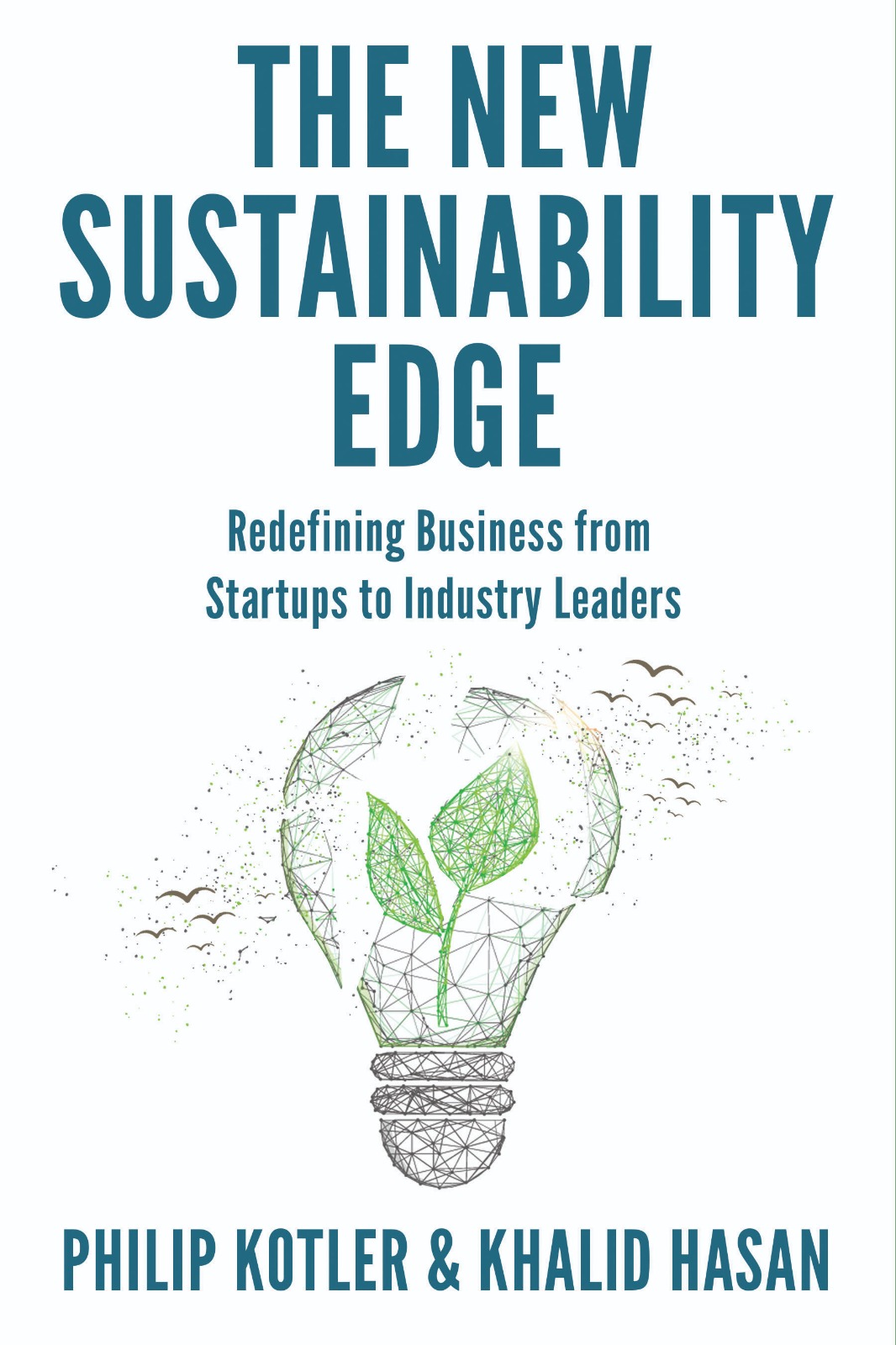
The New Sustainability Edge
01
The New Sustainability Edge
A landmark guide on how sustainability has shifted from an optional add-on to a core competitive strategy. Kotler and Hasan show how businesses of every size can embed environmental and social responsibility into their DNA — not just to do good, but to drive lasting growth and outpace the competition.
Philip Kotler & Khalid Hasan
" alt="Book Title" />
02
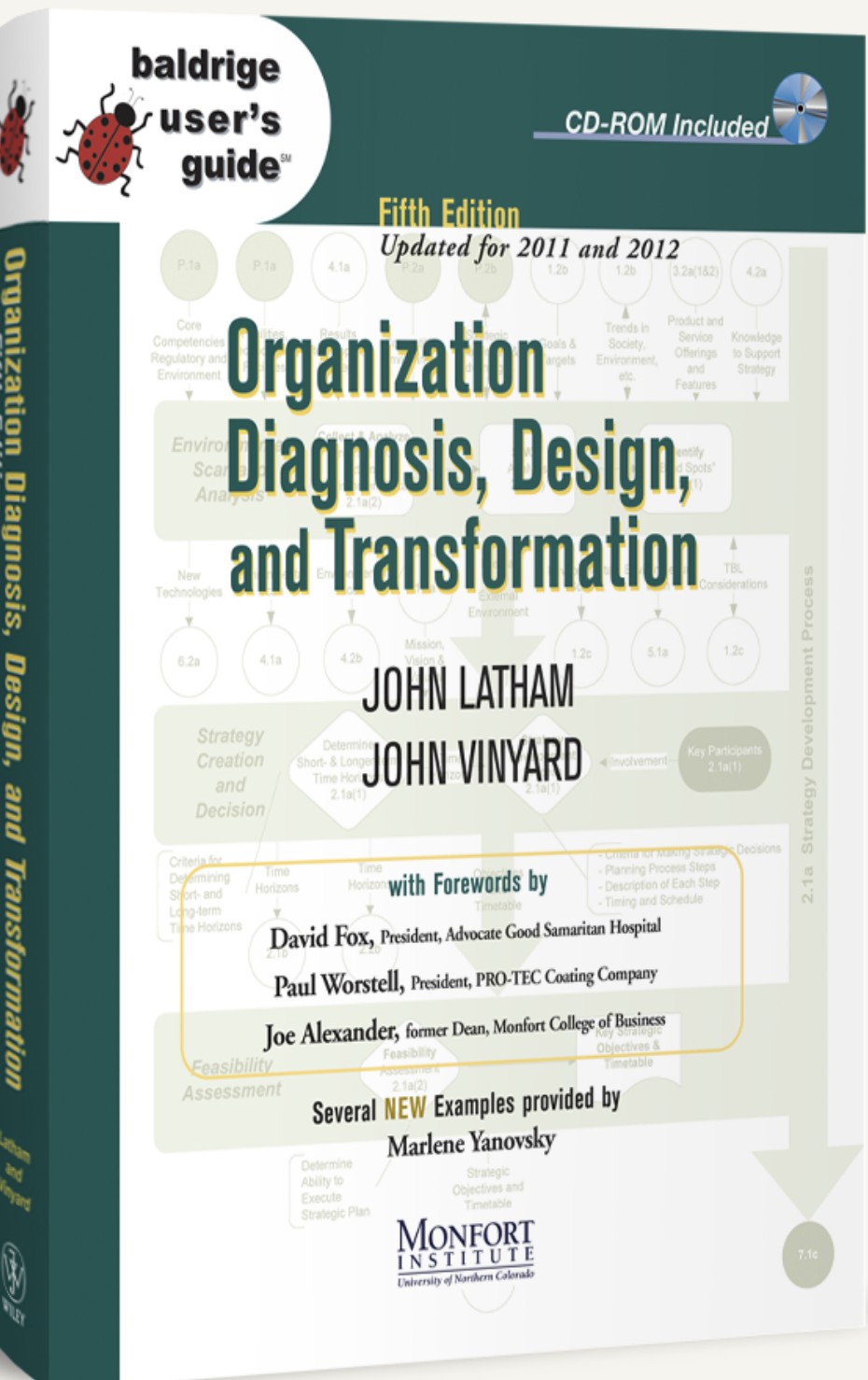
Organization Diagnosis, Design, and Transformation
Practical guide built around the Baldrige Excellence Framework, helping organizations systematically assess their current state, redesign their structure, and lead successful transformation. Now in its Fifth Edition (updated for 2011–2012), it walks leaders through strategy creation, decision-making, feasibility assessment, and the full strategy development process using a structured, step-by-step approach.
John Latham & John Vinyard
" alt="Book Title" />
03
The 13 Key Performance Indicators for Highly Effective Teams
Practical leadership guide that identifies and explores 13 specific, measurable indicators that distinguish high-performing teams from average ones. It provides managers, team leaders, and HR professionals with a clear framework to diagnose team health, track performance, and implement targeted improvements. Drawing on real-world research and case studies, the book covers areas like communication, trust, accountability, and collaboration.
Allam Ahmed, George Siantonas & Nicholas Siantonas
" alt="Book Title" />
04
Smart KM Model: An Integrated Knowledge Management Framework for Organizational Excellence
presents a comprehensive and integrated framework for implementing Knowledge Management (KM) across organizations. The book guides leaders and practitioners through a structured model for capturing, sharing, and leveraging organizational knowledge to drive efficiency, innovation, and sustainable excellence. It bridges theory and practice, making it highly relevant for executives, policy makers, and academics looking to embed a smart knowledge culture within their institutions.
Allam Ahmed & Mohamed Elhag


You May Also Be Interested In

Artificial Intelligence and Knowledge Management for Effective Leaders

Artificial Intelligence and Knowledge Management for Effective Leaders 18 Hours Course (Face to Face and…
  • Phone Number
  • SDG4
  • +3

Female Pelvic Medicine and Reconstructive Surgery (UROGYNAECOLOGY)

Female Pelvic Medicine and Reconstructive Surgery (UROGYNAECOLOGY)      REGISTER 48 Hours Course Friday…
  • Phone Number
  • SDG4
  • +4

Digital Transformation and Sustainable Development for Future Women Leaders

18 July 2023 This two-day course will be facilitated by world renowned experts in Digital Transformation…
  • Phone Number
  • SDG4
  • +2

The London Institute of Sustainable Development (LISD), founded under the auspices of the World Association for Sustainable Development (WASD), is a global centre committed to advancing the United Nations 2030 Agenda and its 17 Sustainable Development Goals (SDGs) through higher education, research, training, and consultancy.

Facebook-f Youtube Twitter Linkedin Flickr

Quick Links

  • About LISD
  • Gallery
  • Teams
  • Contact Us
  • Book Store

EXPERTS

  • Global Who’sWho
  • Women Who’sWho
  • Diaspora Who’sWho
  • Arab Who’sWho
  • Africa Who’sWho
  • Sudan Who’sWho

Get in touch

© LISD

All rights reserved

Cart

  • Facebook
  • Twitter
  • WhatsApp
  • Telegram
  • LinkedIn
  • Tumblr
  • VKontakte
  • Mail
  • Copy link